Author: cinemakersnp1@gmail.com

  • Film Tourism in Nepal: Exploring a Land of Mountains

    Film Tourism in Nepal: Exploring a Land of Mountains

    A small country that has a lot of possibilities for Film Tourism in Nepal. In the last century, cinema has captivated audiences worldwide, inspiring and entertaining them like no other form of art can. One of the aspects that makes cinema a standout art form is the breathtaking landscapes portrayed on the silver screen are real places on the planet. This has led to more forms of tourism, called Film Tourism, where people visit a location they saw in their feature film. One such enchanting destination that has gained popularity over the years in Nepal.


    Film tourism is also known as film-induced tourism. Simply describing this concept is the phenomenon of tourists traveling to a destination because they saw it on their favorite television, video, or cinema screen. This form of tourism gives a unique opportunity to film enthusiasts around the world to immerse themselves in the world of their favorite films and experience the magic of the place firsthand.
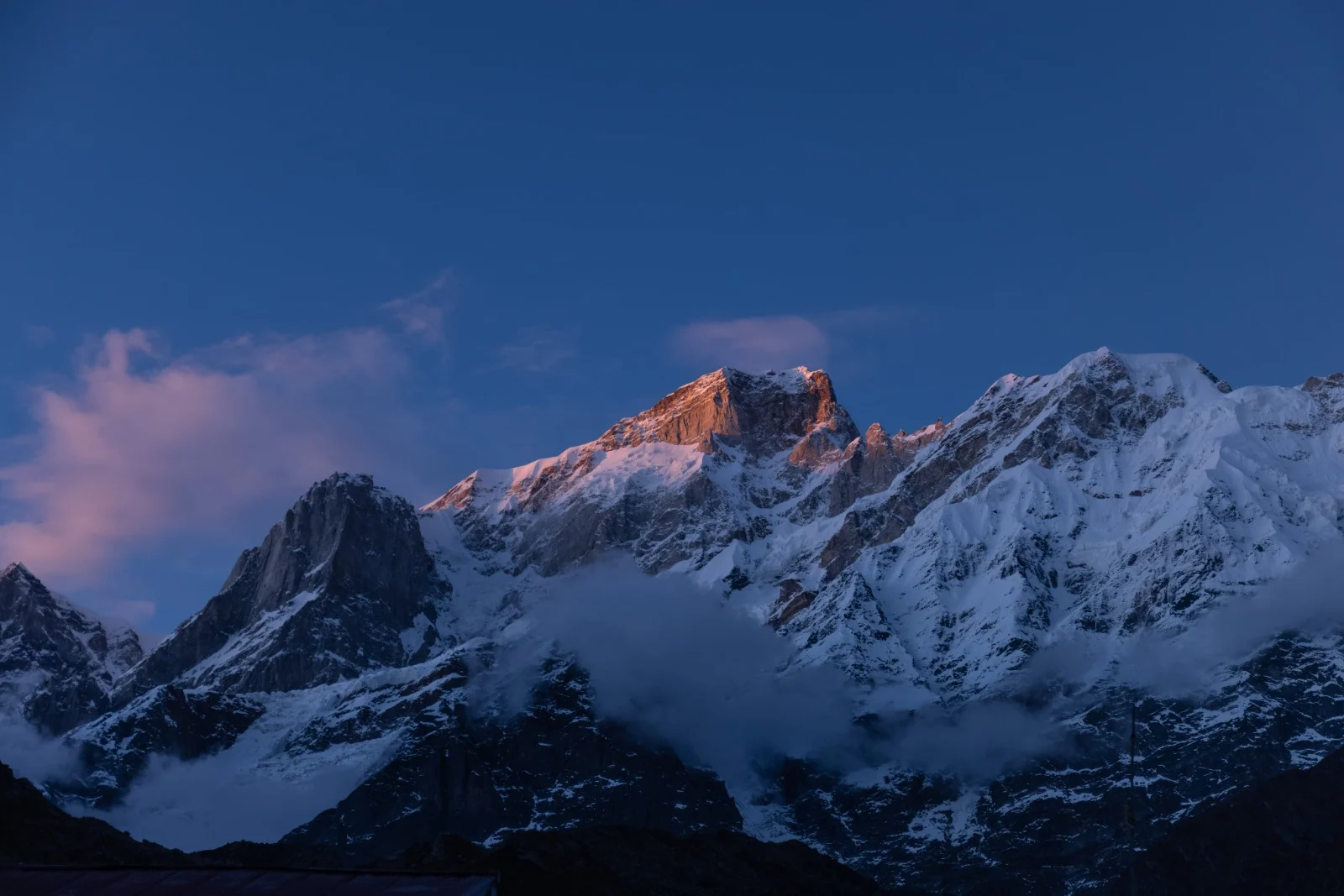
    cinema-tourism

    One of the most prominent examples of film tourism in nepal is the impact of the epic film ‘The Lord of the Rings’ on New Zealand tourism. The trilogy was shot in New Zealand, which showcased the stunning landscapes and sceneries. It is estimated that after the film was shown on the big screen, the countries started receiving an average of 47,000 tourists annually to the filming sites. Six percent of the people who visited stated that the sole reason for visiting New Zealand was because of their favorite film, ‘The Lord of the Rings.’ This is a testament to the film’s impact on the country’s tourism.


    Movies have a significant impact on tourism by giving an additional reason for visitors to visit a specific region. Someone who had no intention of visiting New Zealand may reconsider after viewing the breathtaking scenery depicted in “The Lord of the Rings.” Similarly, filming “Mamma Mia 2” on Vis Island in Croatia has brought many tourists who want to see the scenery themselves.


    Films cannot attract tourists but also create opportunities for local businesses to thrive. For, e.g., it has given local businesses the to set up gift shops that sell movie-related merchandise, and we know there will be numerous photo booths at the selected location. Moreover, there are opportunities to conduct specialized guided tours of these filming spots, providing visitors with an in-depth and immersive experience.


    Let us now focus on the enthralling realm of film tourism in Nepal. Nepal is a region of extraordinary beauty, nestled between the towering Himalayas and the lush jungles of the Indian plains, where snow-capped peaks and mythological myths blend flawlessly.


    Nepal has retained an alluring fascination for travelers seeking adventure and peace since it opened its doors to foreigners in the 1950s. The Himalayas, home to some of the world’s most iconic and accessible hiking paths, draw trekkers worldwide. Whether going to Everest Base Camp or visiting the Annapurna Circuit, Nepal provides unrivaled possibilities to see breathtaking Himalayan beauty. Trekkers can find peace in snug lodges at the end of a long day and eat a hot dinner or a slice of apple pie, making the trip truly unforgettable.


    Nepal has many thrilling activities for anyone looking for an adrenaline rush. Rafting down raging rivers, bungee jumping into bottomless Himalayan gorges, canyoning through rugged terrain, climbing towering peaks, kayaking in pure lakes, paragliding over stunning scenery, and mountain biking through challenging trails—the possibilities are endless. The stunning landscapes of Nepal provide the ideal setting for exhilarating excursions that cater to any adventurer’s ambition. Due to its unique natural beauty, it attracts many filmmakers to shoot their film in Nepal, which will help to boost film tourism in Nepal.


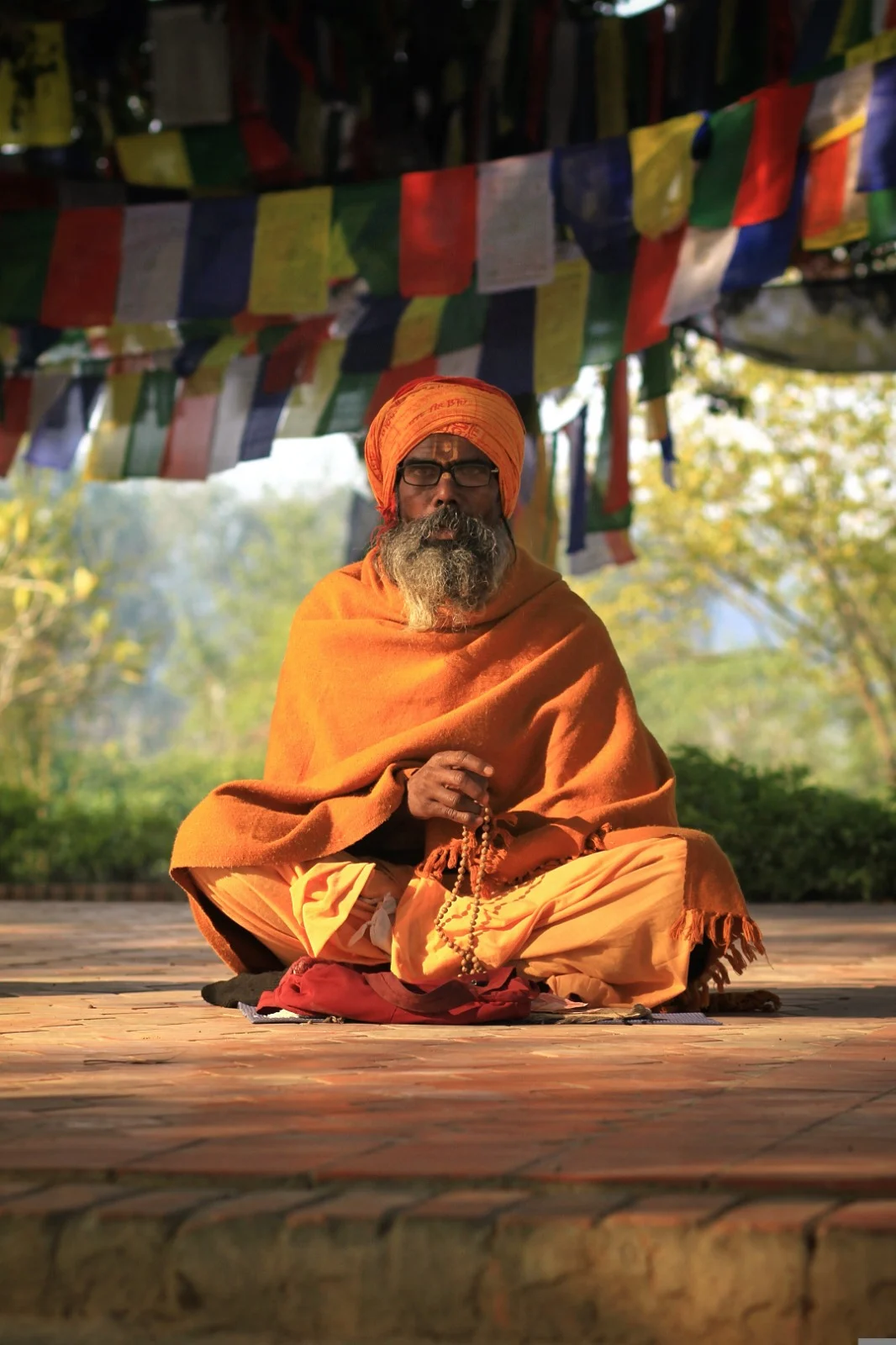
    However, my fascination with Nepal continues after the world’s mountains and adventure. The country’s ancient cultural heritage and spiritual significance attract tourists for a different experience on Nepal tour. Exploring the temple-lined alleyways of Kathmandu, Patan, and Bhaktapur, walking through medieval squares, and joining Buddhist pilgrims on spiritual walks around historic stupas and temples are peaceful and self-discovery adventures. The ancient city of Kathmandu Valley, decorated with centuries-old monuments, offers a pathway to understanding Nepal’s rich history and religious traditions. The sacred site of Lumbini, the birthplace of Lord Buddha, holds immense significance for Buddhists worldwide and attracts pilgrims seeking enlightenment and inner peace.
    fiml-tour

    Imagine being able to enter the world of movies and witness the enchantment of Nepal firsthand. Nepal has provided a mesmerizing setting for countless films, exhibiting its natural beauty and cultural legacy to audiences worldwide. Look at some noteworthy films that helped Nepal become a global film tourist destination.


    “Himalaya” (1999): Directed by Eric Valli, this French-Nepalese film portrays the story of a community in Nepal’s Dolpo region and its yearly yak caravan. The stunning Himalayan landscapes and the genuine depiction of local culture won the film an Academy Award nomination for Best Foreign Language Film. Following the film’s release, the Dolpo region saw an increase in tourist interest as people went to see the breathtaking scenery and immerse themselves in the customs described in the film.


    “Little Buddha” (1993): This film, directed by Bernardo Bertolucci, takes audiences on a spiritual journey through the life of Siddhartha Gautama, the historical Buddha. Part of the film was shot in Kathmandu and Lumbini, highlighting the country’s rich religious legacy. Following the film’s premiere, Lumbini became a Buddhist pilgrimage site and a must-see destination for people seeking a greater understanding of Buddhism.


    “Everest” (2015): Based on the true-life tragedy of Mount Everest’s 1996 disaster, this film shows the terrifying experiences of climbers stranded in a violent blizzard. While most of the film was shot in the Italian Alps, Nepal plays an essential role in the plot as the entrance to Mount Everest. Following the publication of the film, there was a surge in interest in trekking to Everest Base Camp, with adventurers eager to experience the appeal and challenges of the world’s highest peak.


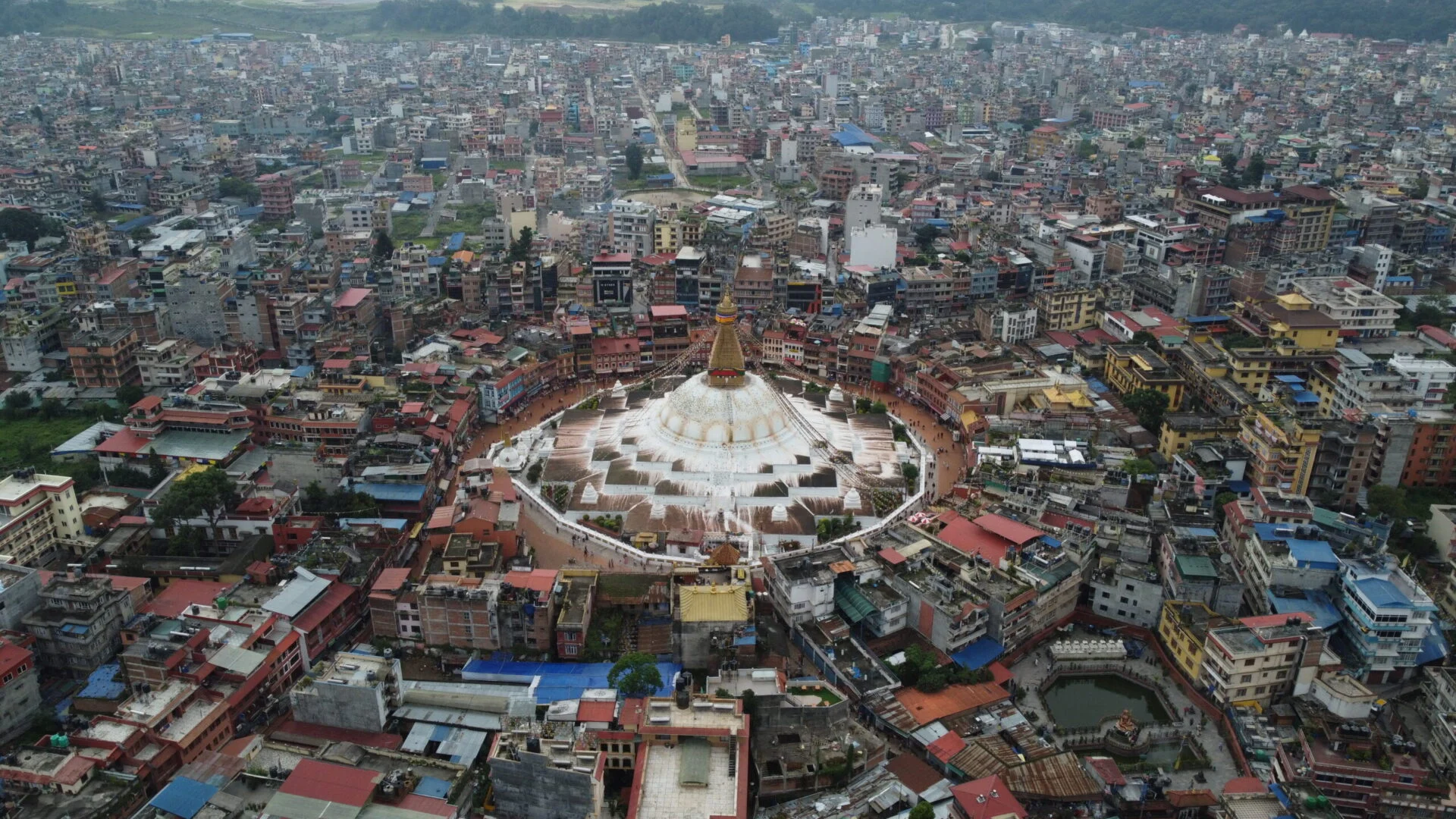
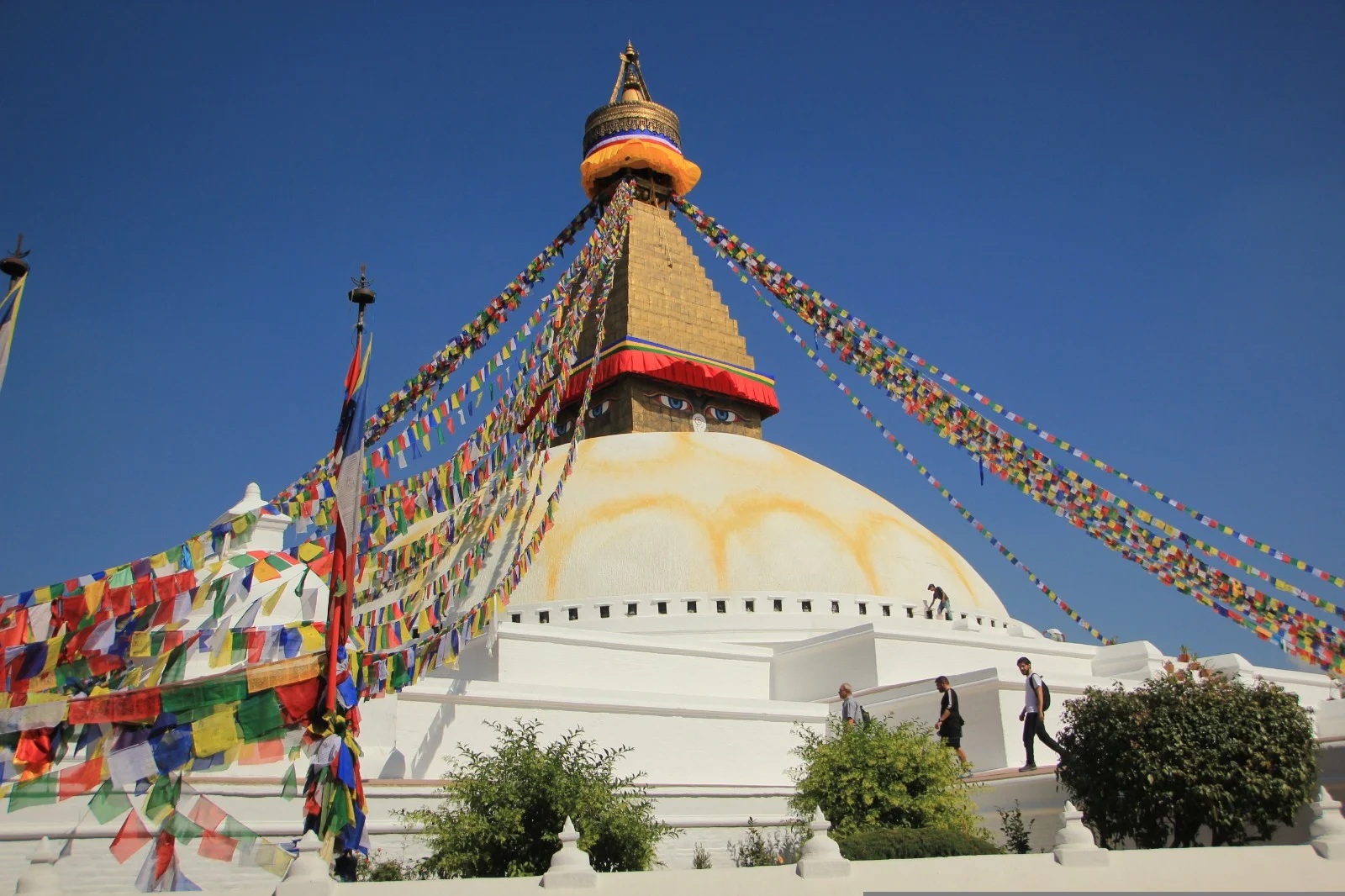
    “Doctor Strange” (2016): Several visually gorgeous scenes located in Nepal appear in this Marvel superhero picture. The magical backdrop for Doctor Strange’s instruction in the mystical arts is the ancient city of Kathmandu and its prominent landmarks, such as the Boudhanath Stupa and the Swayambhunath Temple. With the film’s premiere, audiences were introduced to the magical allure of Nepal’s spiritual capital, prompting many to explore the country’s spiritual side.


    These are just some of the films that have showcased Nepal’s natural beauty and cultural richness to the world. Film tourism in Nepal offers an incredible opportunity to film enthusiasts to step into their favorite films. Whether it’s trekking through the stunning Himalayas, exploring ancient temples and cities, or immersing oneself in the vibrant culture of Nepal, Nepal is the destination.


    Both tourists and local populations stand to benefit from film tourism in Nepal. Nepal can highlight its natural and cultural richness while supporting sustainable tourism by luring people through cinema’s fascination. Nepal must manage film tourism responsibly and in a way that protects the country’s natural and cultural heritage.


    Furthermore, a partnership between the film and tourist industries might result in reciprocal benefits by promoting Film Tourism in Nepal. Encourage filmmakers to choose Nepal as a shooting location to increase the country’s visibility and attract more tourists. Increased tourism can produce cash and fund infrastructure development, conservation, and community initiatives.


    Using digital platforms and marketing methods to promote film tourism in Nepal effectively is critical. Social media marketing, targeted advertisements, and partnerships with travel influencers can raise awareness and attract a larger audience. Participating in international film festivals and hosting film-related events can emphasize Nepal’s cinematic connections and pique the interest of moviegoers.
    fiml-tourism

    Lastly, the collaboration between the film and tourism industries has enormous potential for film tourism in Nepal. By encouraging filmmakers to shoot in Nepal, the country can profit from increased awareness and attract more tourists. This creates cash that can be used for essential things like infrastructure development, conservation activities, and community initiatives.


    Nepal must embrace digital platforms and new marketing tactics to exploit film tours in Nepal’s power effectively. Social media marketing, targeted advertisements, and collaborations with travel influencers can raise awareness and attract a larger audience. Furthermore, active involvement in international film festivals and hosting film-related activities can help cement Nepal’s reputation as a cinematic destination, capturing the imaginations of moviegoers worldwide.


    Nepal can welcome a new wave of travelers seeking immersive encounters and cinematic adventures by exploiting the influence of film and embracing the opportunities it brings. Film tourism in Nepal allows visitors to immerse themselves in their favorite movies, helps the country’s economic growth, and preserves its natural and cultural riches.


    With its unsurpassed beauty and rich cinematic ties, Nepal awaits your arrival. Come experience the reel-to-real magic in this charming region, where cinema and tourism collide to produce unique encounters. Allow Nepal to take center stage in your once-in-a-lifetime cinematic adventure.
  • Seven Reasons to Work with a Fixer in Nepal

    Seven Reasons to Work with a Fixer in Nepal

    fixer service in nepal

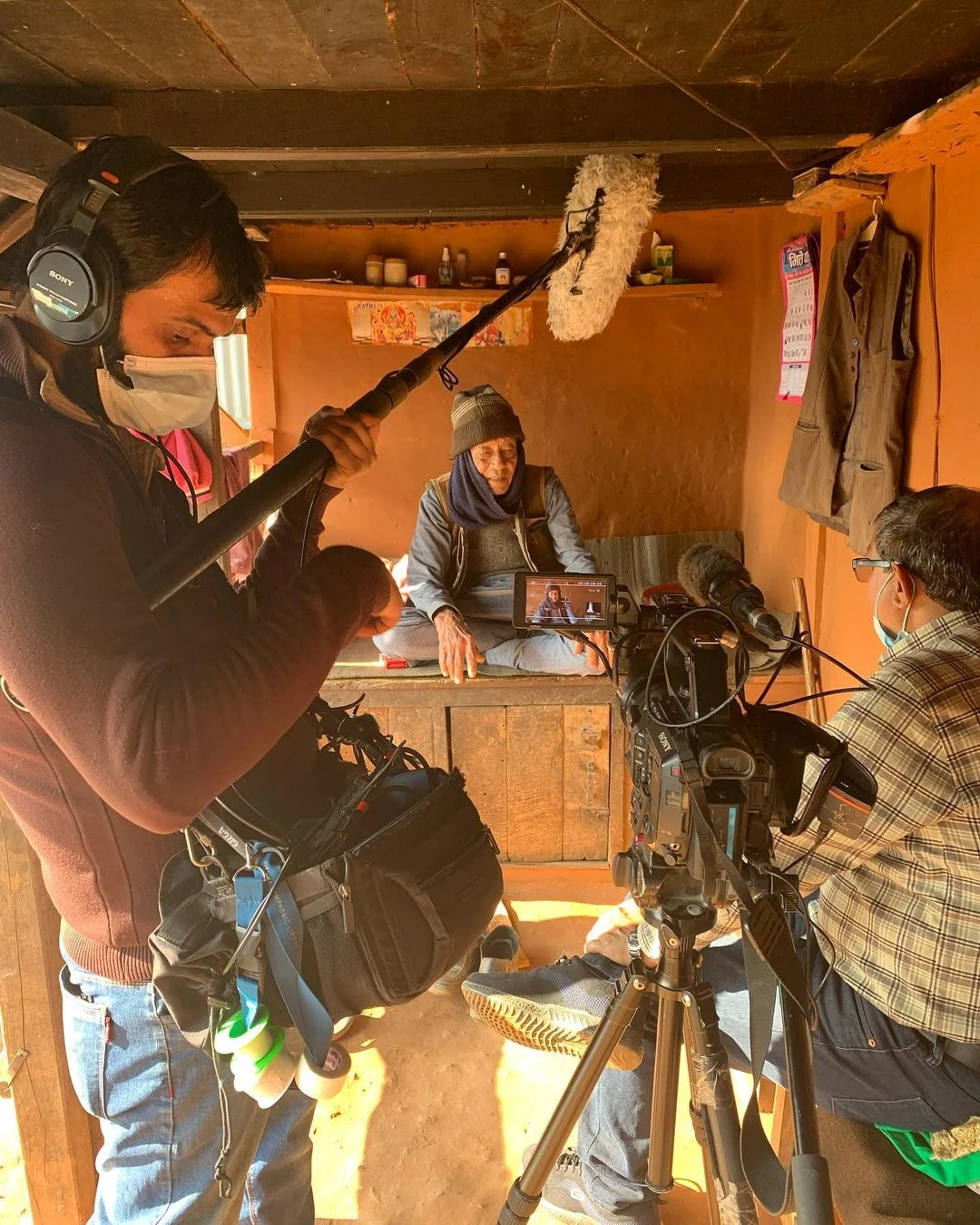
    Nepal is a land of unsurpassed beauty and diversity, with gigantic snow-capped peaks, ancient architecture, and ancient cultures. Hence, filmmakers worldwide travel to Nepal to shoot their films and documentaries. As fascinating as this sounds, it is equally difficult to navigate the workings of Nepal and bring your cinematic vision to life. Traveling to Nepal may be easy, but it gets challenging as there are language barriers, unfamiliar customs, and bureaucratic hoops that you need to jump into. This is where a fixer can make a world of difference. In this blog, we will explore the seven reasons why you need a fixer in Nepal. From getting past the language barriers to managing the logistics of the shoot, a fixer will become a core part of your team through their support and invaluable local knowledge to make sure you spend most of your time bringing your vision to life. So, if you are planning to shoot your film or documentary in Nepal, find out the seven reasons why you need a fixer in Nepal.

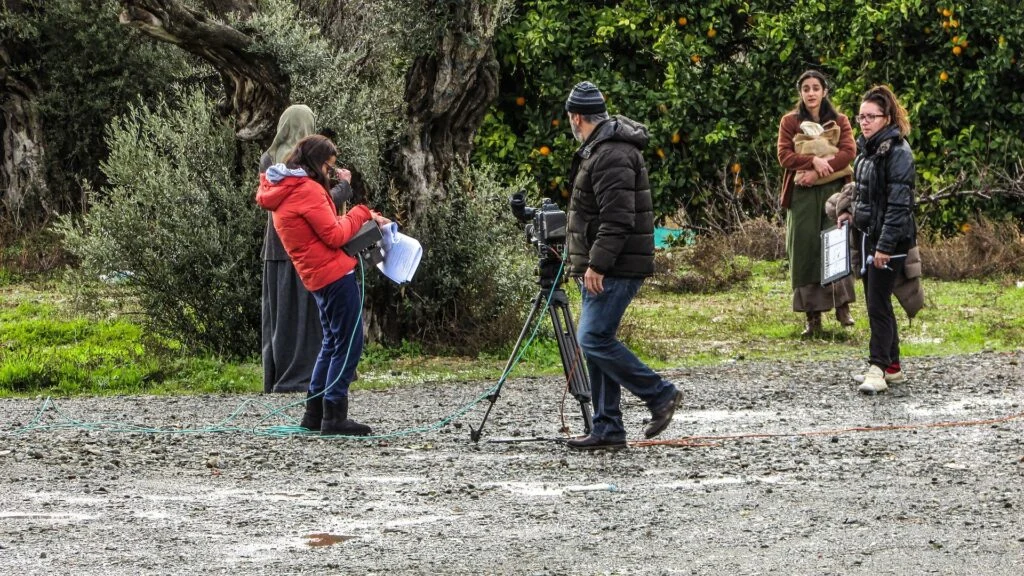
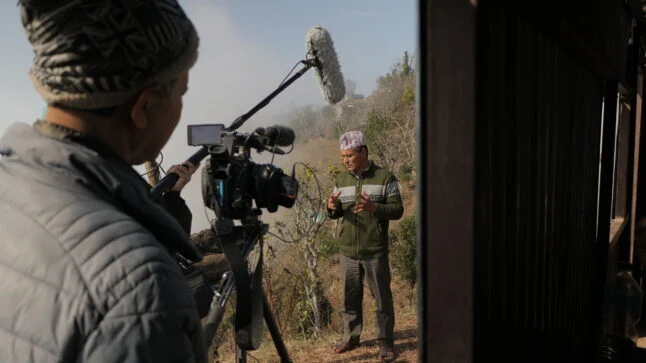
    Film crew shooting an adventure sequence in Nepal

    The Language Barrier

    Yes, the official language of Nepal is Nepali, and some speak English sporadically, but there are about 125 languages in Nepal and several dialects. So, for an international film crew, navigating the language barrier can be an uphill task. There is where a fixer steps in as your linguistic superhero, who is well versed in Nepali and English and maybe also a few regional languages. This is why you will need a fixer in Nepal, as they will help you break down the communication time and be a bridge between you and the locals. Imagine the valuable time you will save during your shoot and make your filming process more effective.

    Knowledge of the land

    Nepal’s cultural richness results from its diverse customs, traditions, and norms. For a filmmaker and crew who travel to Nepal to shoot a project, this can be a cumbersome project if they deal with new rules and customs. Your Fixer in Nepal will be the critical person and trusted guide who will provide invaluable insights into the land, communicate with the locals, and helps you avoid fau pax. Your Fixer in Nepal will also provide all the answers to your questions and help clear your doubts, inadvertently leading you to form a better understanding of the land, its people, and its cultures in different locations.

    nepal-fixer

    Planning your logistics

    From transportation to lodging, planning and managing logistics can be difficult, especially when Traveling to a new country. Conversely, a fixer can take the wheel and drive you in the proper direction. A Fixer, with their knowledge of the local landscape, can assist you with locating the most efficient modes of transportation and suitable lodging. With the logistics burden lifted, you can concentrate on your creative goals and make the most of your time, as your Fixer in Nepal will take care of the rest.

    Permits and Licenses

    To put it bluntly, Nepal doesn’t have the best bureaucracy in the world. The work is slow, and the waiting hours are long. The government has several laws and regulations regarding activities, including filming, photography, and research. Navigating these restrictions and gaining the required permits and licenses can be difficult, but your Nepal Fixer can simplify this process. With their knowledge of the local legal landscape, your Fixer in Nepal can walk you through the paperwork and guarantee that you comply with the law. They can assist you in navigating the bureaucratic maze and obtaining the required permits, ensuring that your job in Nepal is successful and lawful. With a Fixer on your side, you can rest easy knowing that someone will handle the paperwork and keep you on the right side of the law.

    Local fixer coordinating a film shoot in Nepal

    Fixers in Nepal have great networks.

    Your Fixer in Nepal is knowledgeable about logistical and cultural nuances and has a large network of local contacts. They have extensive experience in this industry and have developed partnerships with various stakeholders, including government officials, local communities, and service providers. This implies they can provide helpful thoughts and suggestions after speaking with you and understanding your plans. Your Fixer can use its network to get the best services and equipment to fit your needs. Furthermore, they can provide accurate information about filming in Nepal, ensuring you are current on the most recent regulations and guidelines. Your Fixer’s network and skills can save you important time and resources, allowing you to focus on the creative aspects of your project.

    Cost-effective

    Adding an extra expense may seem unreasonable in a world where time and money are highly precious commodities. However, your Fixer in Nepal can save both your time and money regarding filming and research. Fixers in Nepal will have insider knowledge and extensive connections and will provide you with cost-effective solutions for your film shooting in Nepal. They will help you scout the best locations to negotiate better deals with local suppliers and vendors. Your Fixer in Nepal will play a pivotal role in keeping you within your budget while paying attention to the quality. By working with a fixer in Nepal, you can be fully assured that you will get the best value for your money and end with a successful project where you have brought your vision to life.

    Safety and Security

    While Nepal is generally a safe country, there are risks associated with traveling and working in unfamiliar environments. A Fixer can be a lifesaver in guaranteeing your safety and security throughout your visit. A Fixer can advise you on areas to avoid and potential hazards to be aware of based on their considerable local knowledge. Whether navigating the streets of Kathmandu or hiking in the Himalayas, your Fixer can advise you on how to stay safe while still having fun. You can have the peace of mind that comes from knowing you have a trusted local ally watching out for you every step of the way with their help.

    Things to consider while hiring your Fixer in Nepal

    Check the Fixer’s past work and experiences.

    It is crucial to check the portfolio of the Fixer that you plan to hire for your shoot in Nepal. This will help you identify if they said Fixer is the right fit for your project. The portfolio will also give a clear idea if the Fixer has any experience in your related theme and how their past experiences suit the vision of your project.

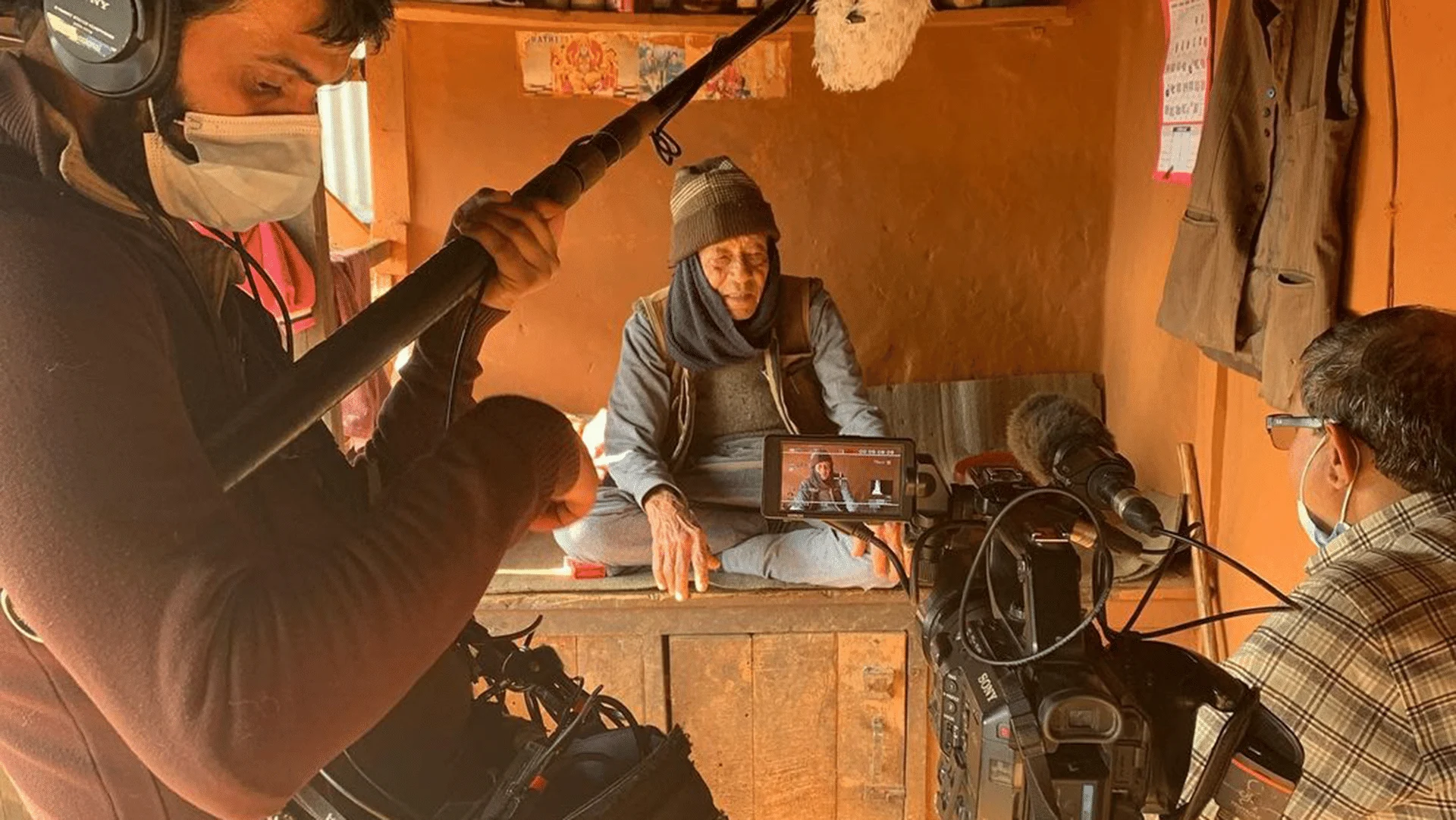
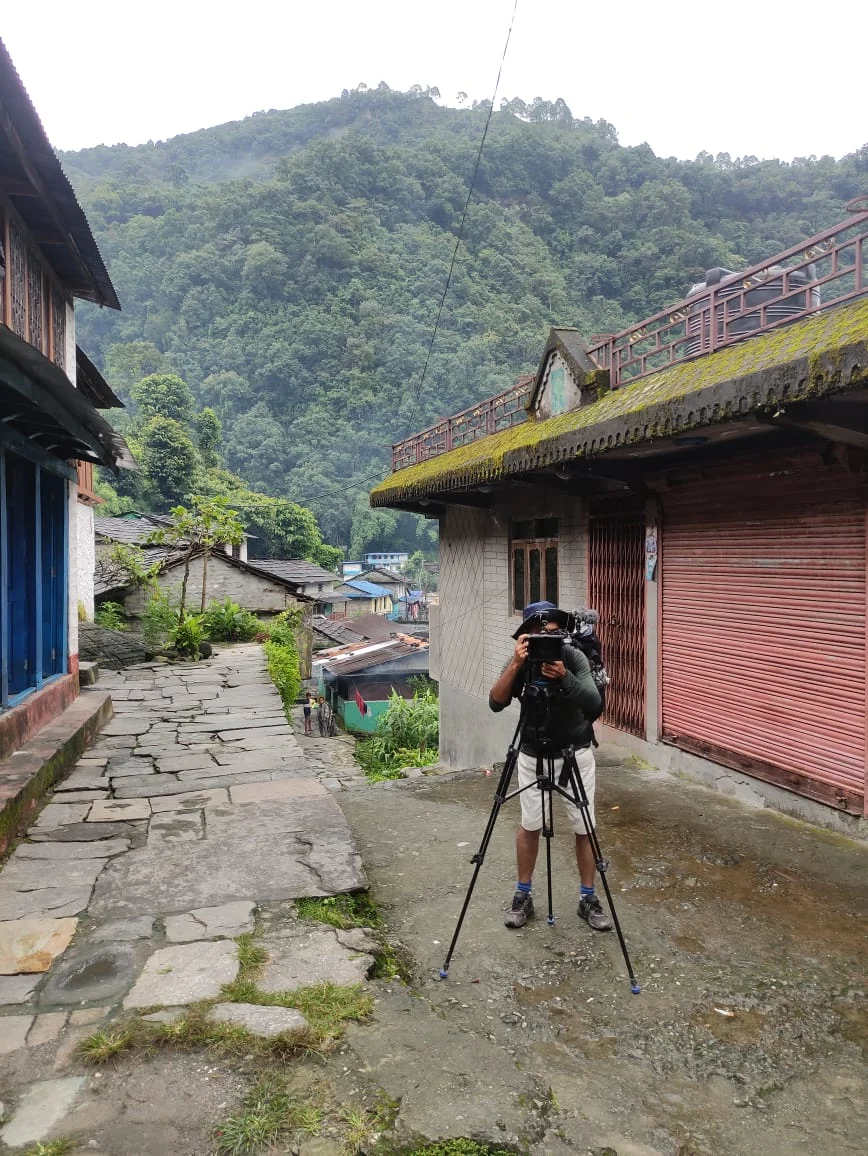
    Cine Makers crew on location in Nepal

    References

    While talking to your potential Fixer, ask them to provide references. Having good references indicates that they have had satisfied clients and good results working with the said Fixer.

    Lastly, your Fixer in Nepal can make your trip to Nepal as pleasant and stress-free as possible by providing valuable insights into local culture and customs and obtaining the appropriate permits and licenses. A Fixer can also assist you in staying safe and secure, provide cost-effective solutions, and provide correct information on filming in Nepal. Finally, partnering with a Fixer in Nepal allows you to focus on your artistic endeavors while your Fixer handles the practicalities, ensuring your time in Nepal is successful. So, if you’re planning a trip to Nepal, hire a Fixer and prepare to explore the beautiful and culturally rich country.

    If you’re considering a film shoot in Nepal and need a dependable Fixer and production assistance, go no further than Cine Makers. We have a team of experienced and educated Fixers who can assist you with everything from permits and licensing to site scouting and local casting as one of the premier production organizations in Nepal. With our broad network of contacts and resources, we can help you make the most of your time in Nepal while also assisting you in realizing your creative vision. So, whether you’re an experienced filmmaker or a first-time visitor to Nepal, contact Cine Makers today and let us help you make your project successful.

    Read more about our Film Fixing & Ground Handling service.

  • Why Nepal Should Be Your Next Filming Destination

    Why Nepal Should Be Your Next Filming Destination

    Nepal can be your best film shooting; location is everything. A stunning backdrop can elevate a film from good to great, capturing the imagination of audiences and transporting them to another world. Nepal is a must-visit destination for filmmakers seeking a truly breathtaking location to bring their cinematic vision to life. With its stunning landscapes, rich cultural heritage, and diverse range of filming locations, Nepal has everything a filmmaker could ask for. In this blog, we will explore why Nepal should be your next filming destination to bring your cinematic vision to life.

    I. Scenic Beauty of Nepal

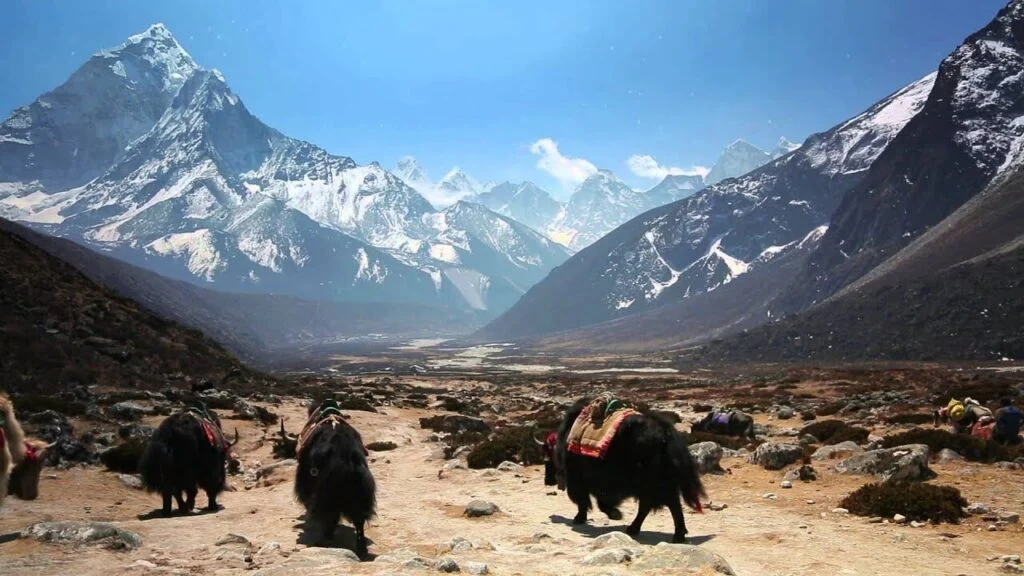
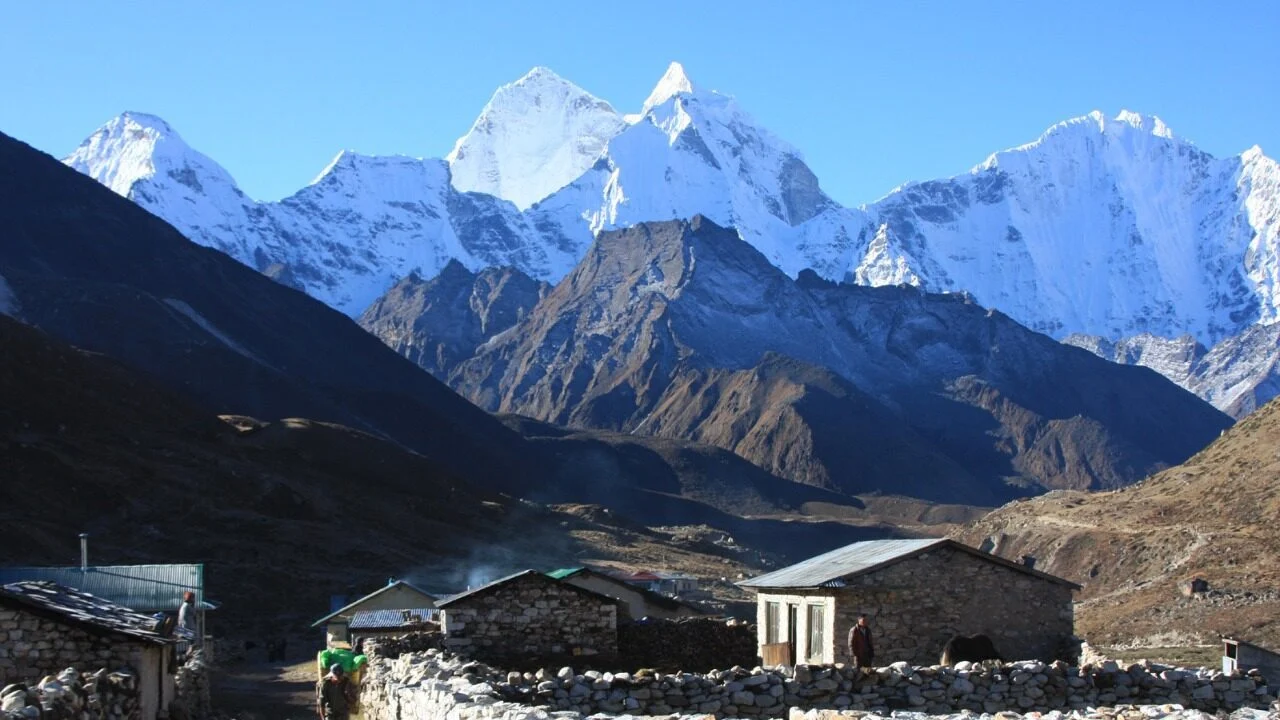
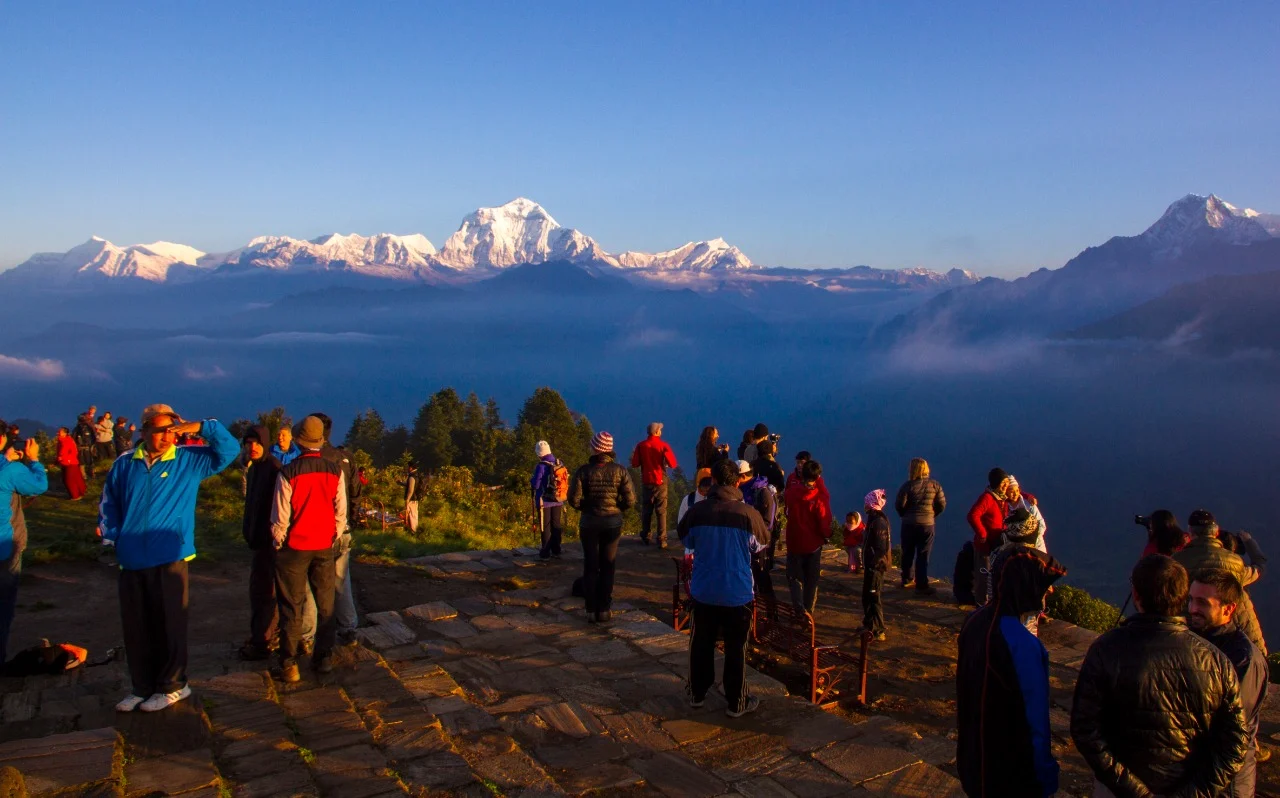
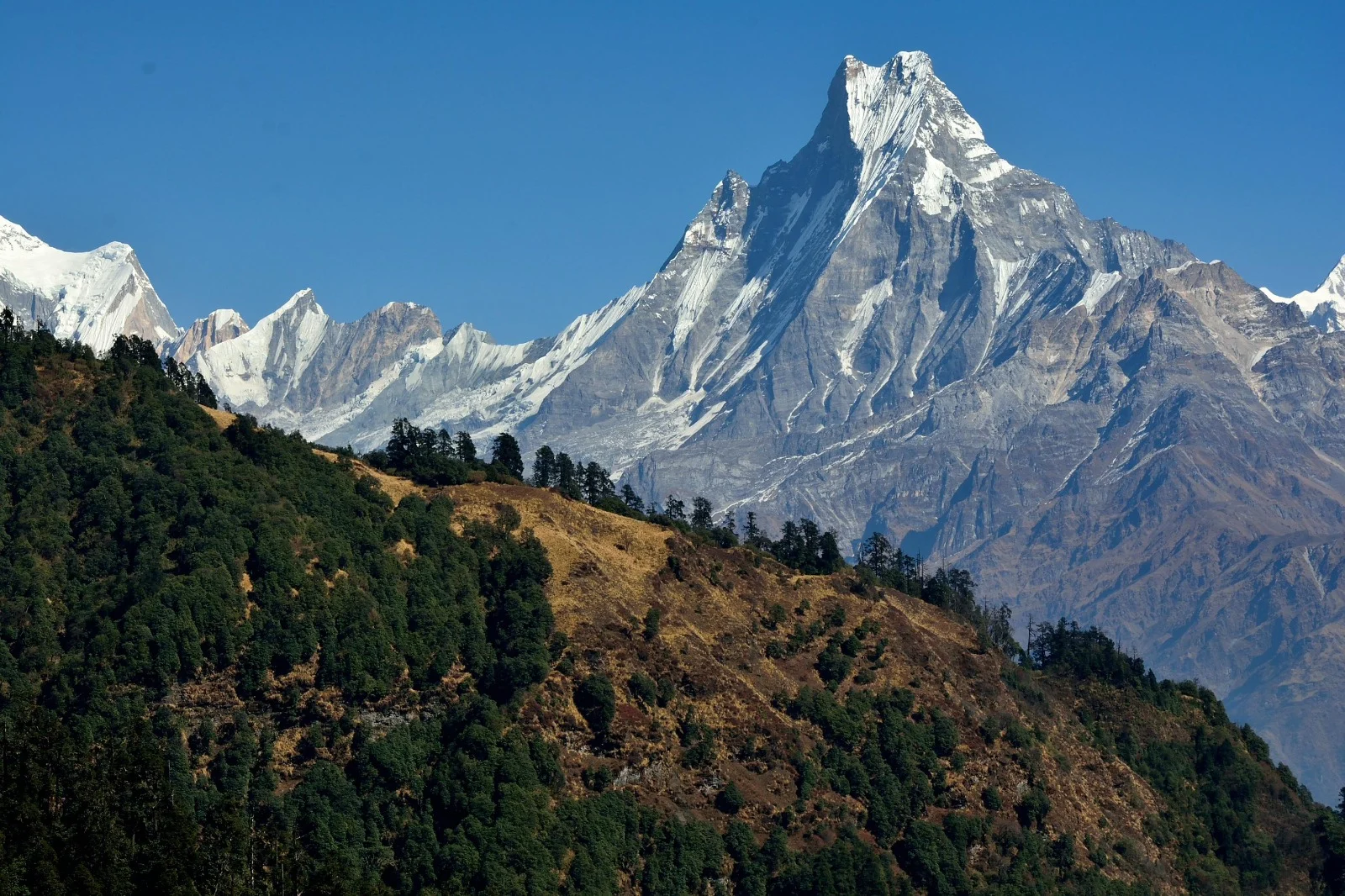
    Nepal is a natural wonderland that never ceases to surprise, nestled in the lap of the mighty Himalayas. This land of a thousand peaks is famous worldwide for being the home of Mount Everest, the highest mountain on Earth. It is also a treasure mine of natural beauty for film shooting. While the mountains take center stage, Nepal has many other hidden jewels that go unappreciated. Nepal’s lush, green plains, for example, are a wonderland of deep tropical and sub-tropical forests, home to some of the world’s rarest and most endangered wildlife species, such as tigers and rhinoceros.

    Nepal is a filmmaker’s dream, with many breathtaking sites to pick from. Nepal offers everything from the soaring peaks of the Himalayas to the lush forests of the plains. Indeed, the 2015 film “Everest” exemplifies Nepal’s natural splendor. The star-studded movie, shot on location in the country, depicts the story of the 1996 Everest disaster, presenting the awe-inspiring environment that lures mountaineers worldwide.

    Mountains-of-Nepal

    (photo by: Source Nepal)

    However, Nepal is more than just a filming location. Its natural beauty and cultural depth provide many stories to tell, and its friendly and inviting people make it a joy to film in. Nepal is a nation of contrasts and contradictions that offers unlimited options for filmmakers trying to capture the essence of this magnificent country, from the bustling city to the quiet countryside. So, whether you’re an experienced filmmaker or just getting started, film shooting in Nepal is a must.

    2. Cultural Richness

    One of Nepal’s most appealing aspects to filmmakers is the country’s rich and diverse culture. The country’s distinct traditions and customs, firmly established in its history and geography, serve as an excellent backdrop for film shooting in Nepal. Nepal’s culture is a treasure mine waiting to be explored via a camera lens, from vibrant festivals and religious ceremonies to complex art and craft.

    Film shooting in Nepal allows you to display the country’s varied traditions and customs to the rest of the world. Nepal’s cultural fabric is extraordinarily diverse, with over 125 ethnic groups, providing filmmakers with a wide selection of themes to explore. The Nepalese are recognized for their friendliness and hospitality, making filming in Nepal a pleasurable and memorable experience.

    Indra-jtra-festival-in-Nepal

    There have been several films that have successfully captured Nepal’s cultural richness. The film “Himalaya” (1999), directed by French filmmaker Eric Valli, beautifully portrays the harsh yet stunningly beautiful landscapes of the Himalayas while also showcasing the traditional life of the people there.

    3. Experienced Crew and Production Support

    As Nepal cements its position as a top destination for filmmakers, the country’s production infrastructure expands significantly. In recent years, there has been substantial growth in the amount of professional crew and production support available in Nepal, making it easier than ever for filmmakers to bring their projects to life in this beautiful country.

    One of the key factors driving growth in film shooting in Nepal is the emergence of a skilled and experienced workforce of production professionals in Nepal. From camera operators and sound engineers to production managers and location scouts, Nepal now has a growing pool of talented individuals who are well-versed in filmmaking. Many of these professionals have gained experience working on international film productions and are now bringing their skills back to Nepal to help build a thriving local film industry.

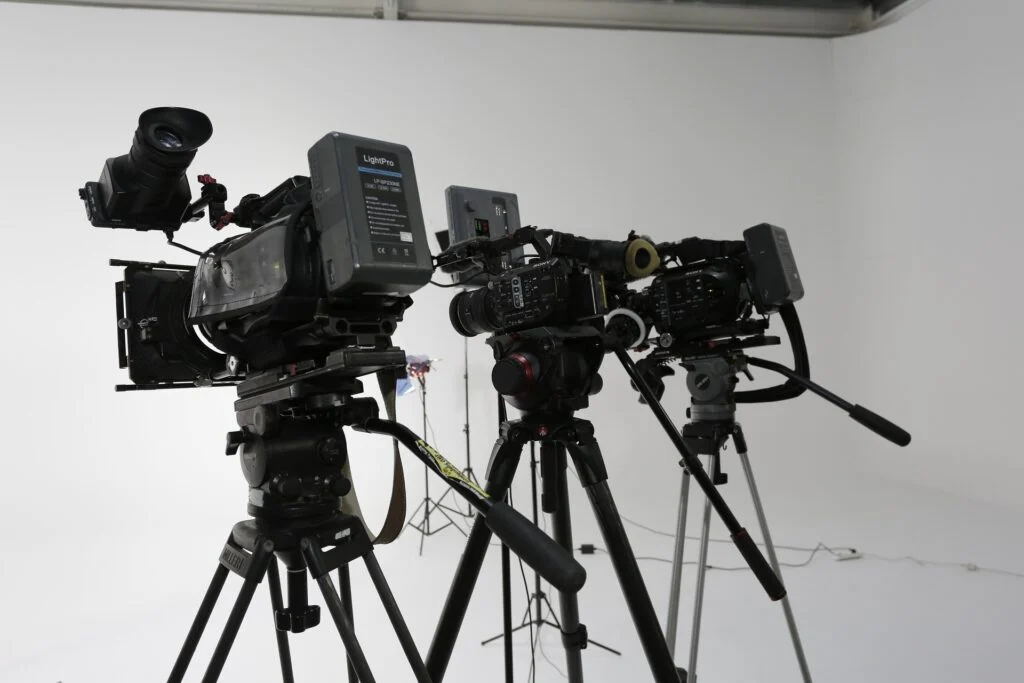
    film-shooting-in-nepal.j

    (source: Pixabay)

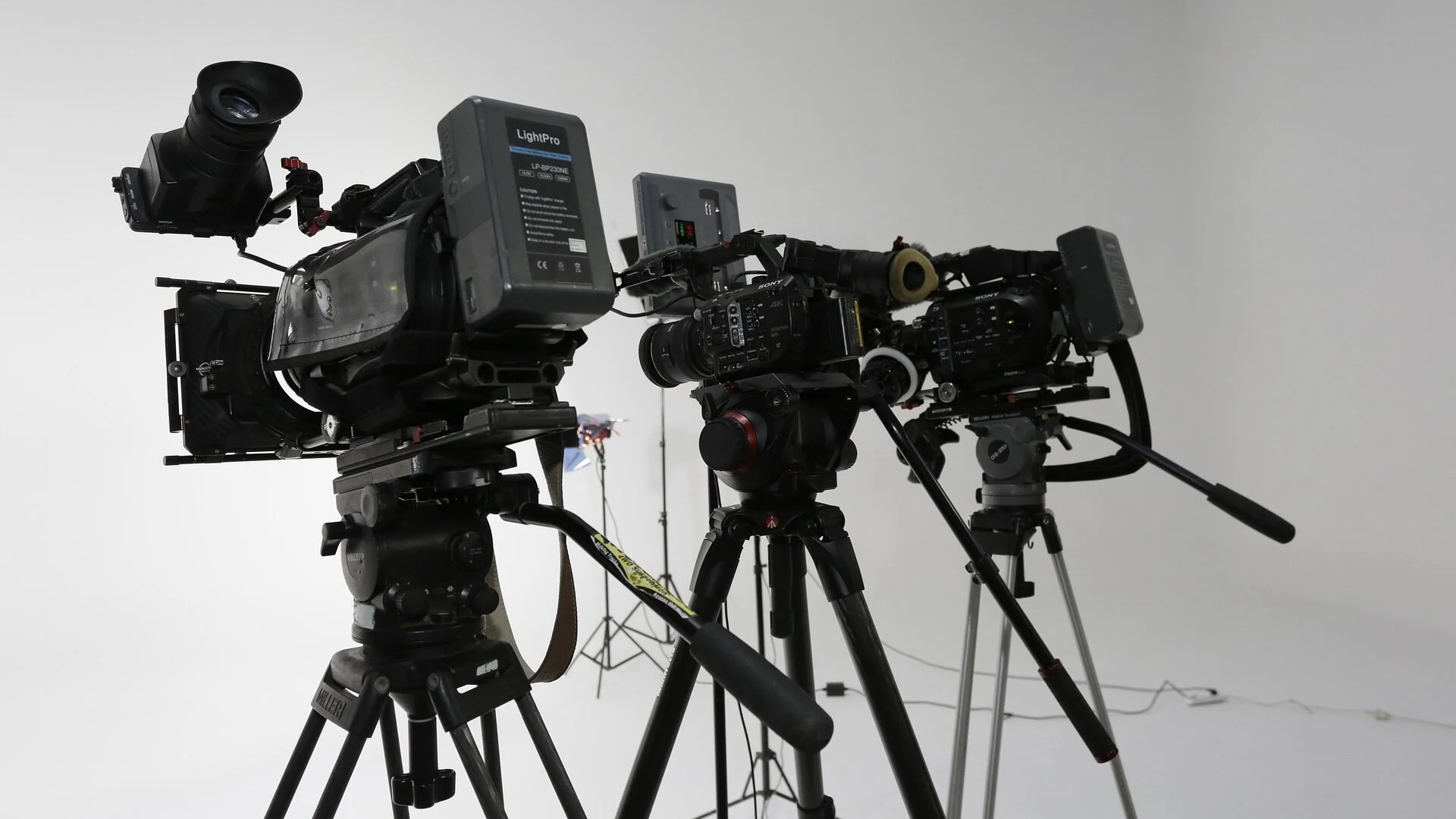
    The availability of high-quality equipment and facilities for film shooting contributes to Nepal’s expanding production support. Because of Nepal’s increasing need for film production, several companies currently supply cutting-edge cameras, lighting equipment, sound equipment, and other production necessities. These companies also invest in advanced post-production facilities, like editing suites and color-grading studios, to ensure filmmakers can access the most up-to-date technology and equipment.

    4. Cost-effective filming

    One of Nepal’s most appealing parts of film shooting is the low production cost. Nepal is a more affordable option than other famous filming locations worldwide that can help filmmakers stretch their budgets further.

    The availability of skilled labor at reasonable rates is one of the primary factors for Nepal’s cheap production costs. As previously said, Nepal has a growing pool of experienced crew and production workers skilled in filmmaking. These pros can offer their services at substantially lesser rates than what filmmakers typically pay in other regions.

    In addition to low-cost labor, Nepal has several other cost-cutting advantages for filmmakers. For example, accommodation, transportation, and additional logistical costs are often lower in Nepal than in other popular filming locations. This implies that filmmakers can save money on everything from hotel rooms to rental cars, allowing them to stretch their budgets even further and invest more in the creative components of their productions.

    film-shooting

    (source:Pixabay)

    5. Adventure Filming Opportunities

    Nepal is the best destination for adventure filmmakers wishing to capture the thrill and excitement of the great outdoors. With its gorgeous landscapes and reputation as a center for adventure sports, Nepal provides filmmakers with limitless opportunities to create aesthetically spectacular and entertaining material.

    Nepal features a broad selection of locales ideal for adventure cinematography, from the Himalayas’ high peaks to the Terai area’s lush jungles. Nepal has it all, whether you want to experience the excitement of mountaineering, the adrenaline of white-water rafting, or the beauty of a picturesque hike.

    One of Nepal’s best aspects of filming adventure content is the number of skilled guides and support workers that can help you negotiate the country’s complex terrain and ensure smooth production. Furthermore, the low production costs and availability of competent personnel make it a cost-effective option for low-budget filmmakers for film shooting in Nepal.

    The Netflix documentary “14 Peaks: Nothing Is Impossible” exemplifies Nepal’s potential for adventure filmmaking. The film was primarily shot on location in Nepal and follows Nimsdai Purja’s ambition to climb all 14 of the world’s 8,000-meter peaks in record time. The film’s spectacular sights of the Himalayan mountains attest to Nepal’s natural beauty and the possibility for additional adventure films to be shot nationwide. Nepal is a filmmaker’s dream, with a plethora of sites and expert support people.

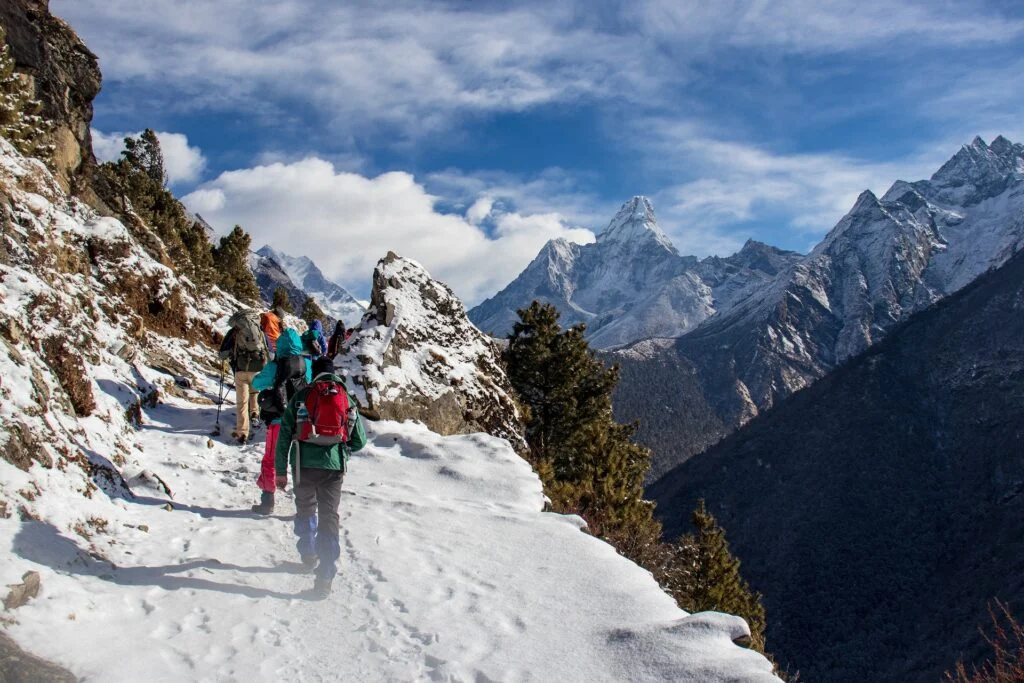
    himalayas

    (Source: Pixabay)

    6. Exploring off-beat locations

    Despite being famous for film shooting, Nepal has several unknown locations that offer distinct and unseen parts of the country. These untouched sites allow filmmakers to exhibit Nepal’s various landscapes and cultures.

    Nepal provides a diverse range of uncharted filming sites, from rural settlements in the high Himalayas to tropical jungles in the south. These areas are visually magnificent and culturally rich, providing insight into the lives of the people there.

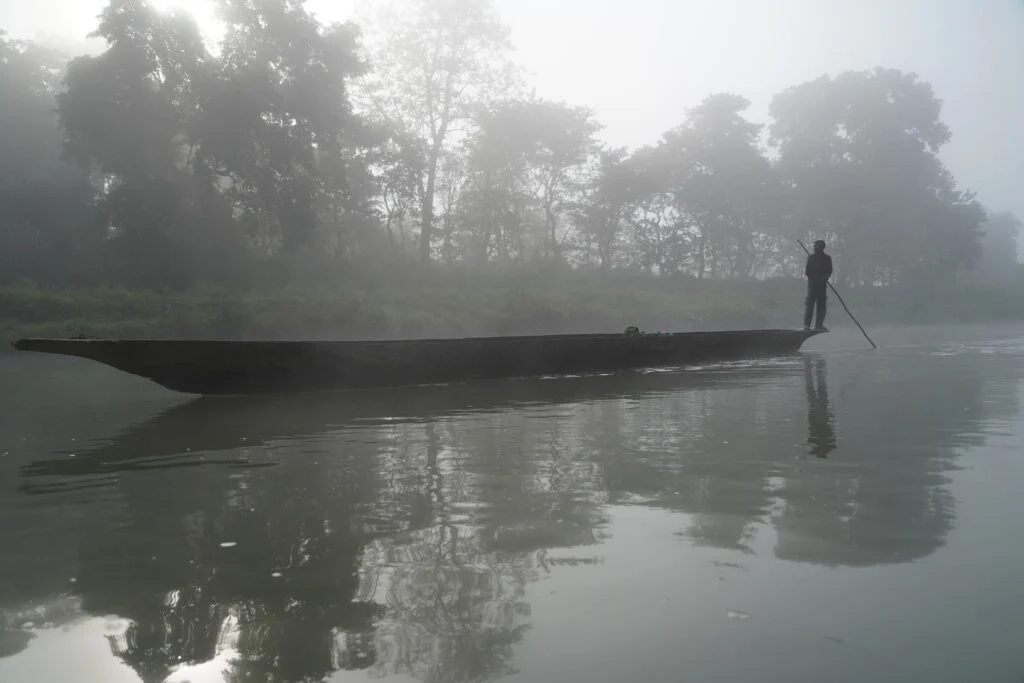
    dugout-canoe

    (Source: Pixabay)

    Filmmakers have the potential to tell untold stories about people and the environment, as well as provide a glimpse into Nepal’s less-explored places. These sites can help visitors better appreciate the country’s cultural richness and natural beauty.

    Exploring these uncharted Nepali areas can also assist in promoting sustainable tourism and protecting the country’s natural riches. Film shooting in Nepal in these off-the-beat settings can draw attention to the beauty and worth of these locales and raise awareness about their significance to future generations.

    7. Nepal’s spectacular wildlife

    Film shooting in Nepal can help portray the majesty and beauty of the natural world. Nepal is a treasure trove of opportunities for documentary filmmakers to explore the natural world, with its gorgeous landscapes, a broad range of ecosystems, and rich wildlife. Nepal is home to a stunning diversity of endangered species rarely seen outside their natural habitats, from the Bengal Tigers of Chitwan National Park to the one-horned rhinos of Bardia National Park.


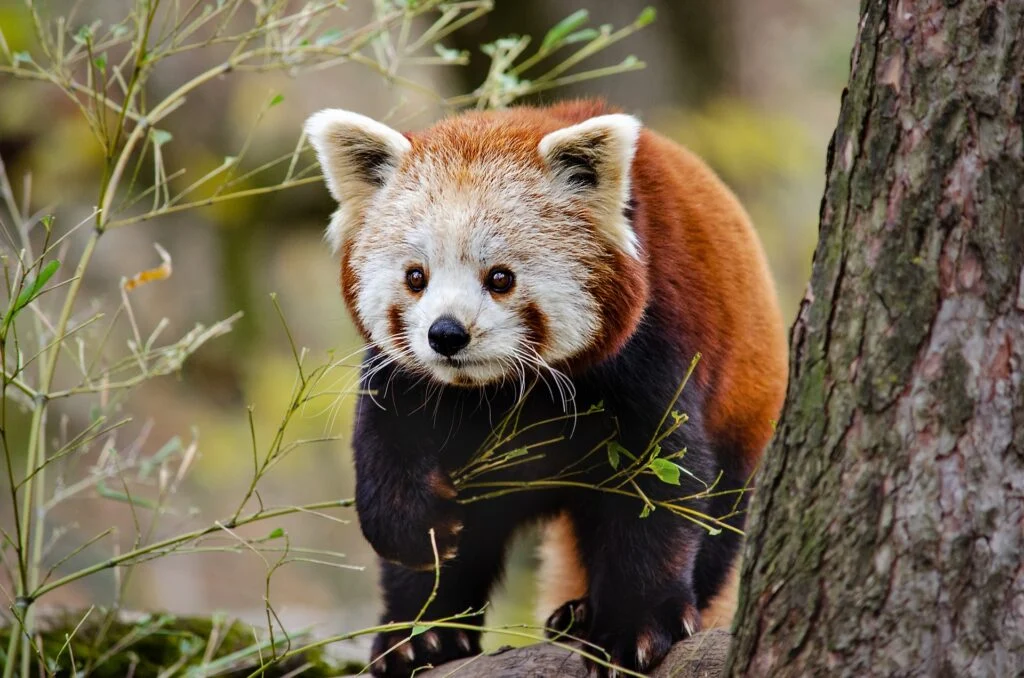
     little-panda

    (Source: Pixabay)

    Filming in Nepal offers a once-in-a-lifetime opportunity to film the efforts of conservationists and researchers trying to safeguard these fantastic creatures and their environments. Furthermore, Nepal is home to some of the world’s most elusive and fascinating carnivores, including the snow leopard, unique to the country’s high alpine regions. Nepal is a must-see location for documentary filmmakers looking to capture the enchantment of the natural world and raise awareness about the critical need to safeguard it.

    Conclusion:

    Nepal is an ideal setting for film shooting for filmmakers to realize their cinematic vision. Nepal has everything a filmmaker could want: magnificent landscapes, a rich cultural past, and a broad filming setting choice. The country’s natural splendor, from the towering peaks of the Himalayas to the lush woods of the plains, makes for a beautiful setting for any film. Nepal is also a prominent filmmaker destination because of its rich and diverse culture, professional crew and production assistance, cost-effective filming, and adventurous filming chances.

    From a bustling metropolis to peaceful countryside, Nepal’s friendly and welcoming people offer limitless opportunities to capture the essence of this lovely country. So, whether you’re a seasoned filmmaker or just starting out, Nepal is a must-visit place for film shooting and bringing your cinematic ideas to life.


  • Documentary Filming in Nepal

    Documentary Filming in Nepal

    Documentary Filming in Nepal is a unique and enriching experience that offers a range of challenges and opportunities. Nestled in the Himalayan mountains, Nepal is a country of stunning natural beauty and cultural diversity. From the Himalayas’ snow-capped peaks to the lush forests and terraced fields of the lowland Terai region, Nepal is a landscape that is ripe for documentary exploration.

    The documentary filming process in Nepal can be complex, as it involves navigating the country’s unique cultural and legal landscape. Filmmakers must obtain proper permits before filming in Nepal, and it is important to be mindful of local customs and traditions. Working with local crew and equipment can also present challenges, as the country’s infrastructure and resources may need to be improved. 

    But despite these challenges, the rewards of documentary filming in Nepal are numerous. The country is home to a wide range of indigenous cultures and traditions, and capturing these in a documentary is a rare and precious opportunity. Additionally, Nepal’s natural beauty and diverse landscape offer a wealth of stunning visual material for documentary filmmakers to work with.

    Overall, documentary filming in Nepal is an enriching experience that offers a unique and compelling look at one of the world’s most fascinating and beautiful countries. Whether you are a seasoned filmmaker or a newcomer to the craft, Nepal is a destination that will inspire and challenge you in equal measure.

    Here is a step-by-step guide for obtaining film permits in Nepal:

    1. Identify the locations you wish to film in Nepal and determine if you need a permit for each site. Some areas may require a permit, while others may not.
    2. Contact the Film Development Board (FDB) of Nepal to request a film permit. The FDB is the government agency responsible for issuing film permits in Nepal.
    3. Submit the following documents to the FDB:
    • A completed film permit application form
    • A copy of your passport
    • A copy of your visa
    • A copy of your film script
    • A letter of recommendation from a recognized film production company (if applicable)
    1. Pay the applicable fee for the film permit. The cost of a film project will vary depending on your documentary’s type and time duration.
    2. Wait for the FDB to review your application and issue a film permit. This process can take several weeks, so planning and allowing enough time for the permit is essential.
    3. Once you receive your film permit, following all the terms and conditions specified in the permit is essential. It may include obtaining additional permits for specific locations, respecting local customs and traditions, and following any other requirements set forth by the FDB.
    4. Remember to carry your film permit while filming in Nepal and be prepared to present it to authorities if requested.

    Finding the perfect location or subject

    Finding suitable locations for your film is a crucial step in production. Here are some tips for finding filming locations in Nepal:

    1. Determine the type of locations you need for your documentary. Are you looking for natural landscapes, urban settings, or a combination? Make a list of the specific types of locations you need to help narrow your search.
    2. Research potential locations online. Many websites and resources can help you find potential filming areas in Nepal. Some helpful starting places include Nepal’s Film Development Board (FDB), local film commissions, and location-scouting companies.
    3. Consult with a local production company or fixer. Working with a local production company or fixer can be a helpful way to find locations in Nepal. These professionals are familiar with the local landscape and can help you identify areas that meet the needs of your documentary.
    4. Consider the logistical requirements of your documentary. When choosing locations, keep in mind the logistical needs of your film, such as access to electricity and water, transportation, and accommodations for cast and crew.
    5. Please make a list of potential locations and visit them in person. Once you have identified some potential sites, see the place in person to get a better sense of the space and ensure that the site meets your needs.  
    6. Obtain the necessary permits to film at your chosen location. Once you have identified the area you wish to film at, obtain the required permits from the Film Development Board (FDB) of Nepal or any other relevant authorities.

    Making use of local resources

    Working with local crew and equipment can be valuable to enhance your film production in Nepal. Here are some tips for working with local team and equipment:

    1. Research local crew and equipment companies. Nepal’s local crew and equipment companies can provide the resources you need for your film production. Look for companies with a good reputation and experience working on projects similar to yours.
    2. Consider the specific needs of your film. Make a list of the crew and equipment you need for your film, including camera operators, lighting technicians, and any specialized equipment such as drones or cranes.
    3. Contact local crew and equipment companies and request quotes. Reach out to local crew and equipment companies to request quotes for your needed resources. Ensure to provide as much detail as possible about your film and the specific crew and equipment required.
    4. Negotiate terms and finalize contracts. Once you have received quotes from local crew and equipment companies, negotiate terms and complete contracts to ensure that you have the resources you need for your film production.
    5. Communicate effectively with your local crew and equipment. Establishing clear lines of communication with your local crew and equipment is essential to ensure that everything runs smoothly on set. Ensure that everyone is aware of their roles and responsibility as crew members. 
    6. Be respectful of local customs and traditions. Nepal is culturally and naturally diverse. And it is important to respect local customs and traditions when working with local crew and equipment. Be mindful of cultural differences and be open to learning from your local colleagues.

    Challenges:

    • Obtaining film permits: The process of obtaining film permits in Nepal can be complex and time-consuming. Filmmakers must submit a completed application form, copies of their passport and visa, a copy of their film script, and a letter of recommendation from a recognized film production company (if applicable).
    • Limited infrastructure and resources: Nepal is a developing country with limited infrastructure and resources, making it challenging to find and access specific locations, equipment, and crew.
    • Cultural differences: Nepal is a culturally diverse country, and there may be differences in customs and traditions that filmmakers must be aware of and respect.

    Opportunities:

    • Unique landscapes and cultures: Nepal is home to many incredible landscapes and cultures, from the high Himalayas’ snow-capped peaks to the lush forests and terraced fields of the lowland Terai region. Documentary filmmakers have the opportunity to capture these stunning landscapes and rich cultural traditions on film.
    • Access to compelling stories: Nepal has a rich history and cultural heritage, and many compelling stories are waiting to be told. Documentary filmmakers can explore and share these stories with the world.
    • Collaboration with local crew and equipment: Working with local crew members and equipment can be rewarding to collaborate and learn from local professionals. It can also help to support the local film industry and give back to the community.

    Conclusion

    In conclusion, documentary filming in Nepal is a unique and enriching experience that offers a range of challenges and opportunities. Filmmakers must navigate the process of obtaining film permits, work with limited infrastructure and resources, and be mindful of cultural differences. However, Nepal is a country with stunning landscapes and rich cultural traditions, and documentary filmmakers have the opportunity to capture these on film and share them with the world. Working with local crew and equipment can also be a rewarding way to collaborate and learn from local professionals while supporting the local film industry and giving back to the community.

    Planning a documentary in Nepal? See our Production Services & IP Development.

  • Filming in Nepal: An Overview

    Filming in Nepal: An Overview

    Nepal is an excellent country for both casual and professional filmmakers. With its diverse and thrilling landscape, Nepal is a mecca for adventure filmmakers. With its diverse culture, art, and rich history, the country offers plenty of stories and inspiration to narrative filmmakers. Below we will discuss why this is.

    Film crew on location in Nepal

    Nepal is a naturally and culturally diverse country. With over 120 different ecosystems and over 125 ethnic groups, it covers an area of 147181 sq. km. This fact gives an idea of the diversity and richness Nepal possesses. Situated in the lap of the mighty Himalayas, Nepal offers some of the world’s extremes in topography, with 8 of the world’s ten highest mountains above 8000 m. The snow-capped mountains create hundreds of perennial fast-flowing and turbulent rivers which cascade down the hills to the flat plains of Terai. These rivers, coupled with hundreds of lakes, make Nepal the 2nd most affluent country in water resources, proportionate to its size, in the world. The Himalayas host some of the hardiest people in the world, like the Sherpas, Bhotes, Thakalis, and Gurungs. Isolated for many generations due to the rugged topography, ethnic groups in the Himalayas have distinct cultures, traditions, and languages.

    Camera setup during a shoot in Nepal

    The hilly region south of the Himalayan region is vastly covered in deciduous and coniferous forests. It is also rich in hundreds of varieties of medicinal herbs. Most of the country’s major cities, including the capital Kathmandu, lie in this region, and so do the majority of lakes and rivers. Hilly region is the cultural mecca of Nepal. Especially places like Kathmandu, Panauti, Nuwakot, and Makwanpur, where the trade flowed from Tibet into India in ancient times, making the area prosperous in culture. The capital Kathmandu, initially inhabited by the Newar people, is also the cultural capital of Nepal, with 7 UNESCO world heritage sites. The primary inhabitants of the hills are the Brahmins, Chhetris & Newars.

    Production team filming outdoors in Nepal

    Then to the far south comes the terai region, renowned as the bread basket of Nepal. The hundreds of miles of flat plains in this region have led to agriculture and irrigation on a massive scale. Rivers flowing in from the mountains and the hills cross this region and pass into India to the south. This region is flat and easily accessible and hosts almost half of Nepal’s population and industry. Home to a variety of ethnic groups and languages, Terai is also rich in culture and tradition. Places like Janakpur, Chitwan, Dang, and Birgunj are the cultural centers in Terai. The region is inhabited by the Tharus, Rajbanshis, Thakuris, Musahars, and a dozen other groups, with distinct languages and traditions.

  • Filming in the Annapurna Region

    Filming in the Annapurna Region

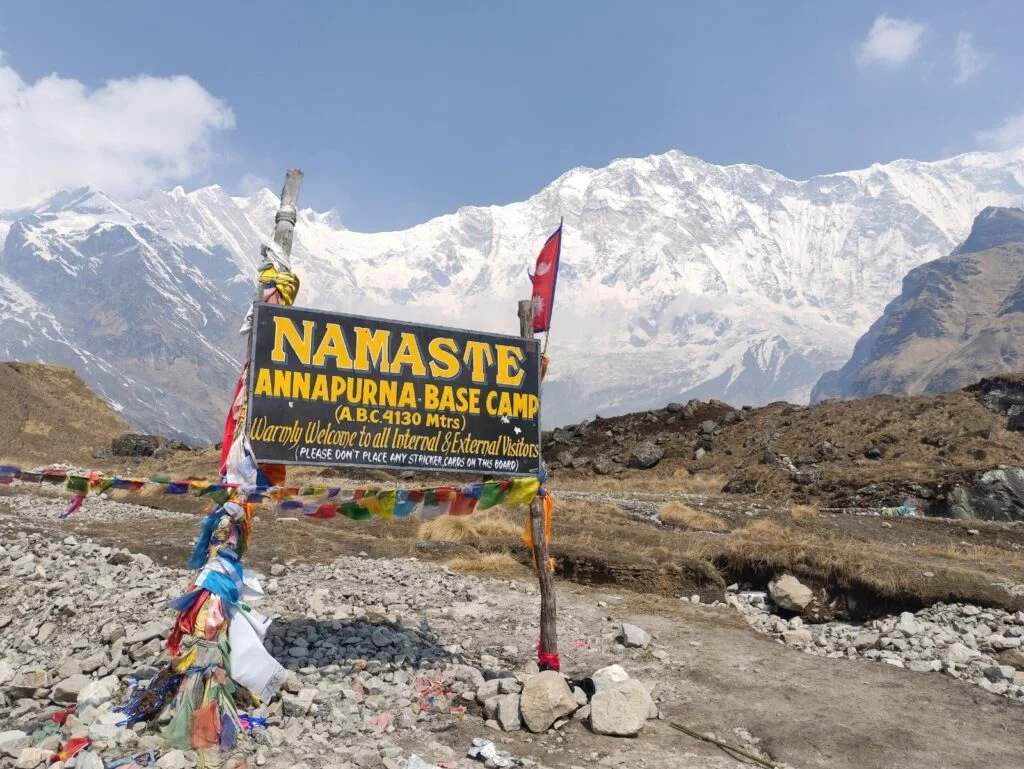
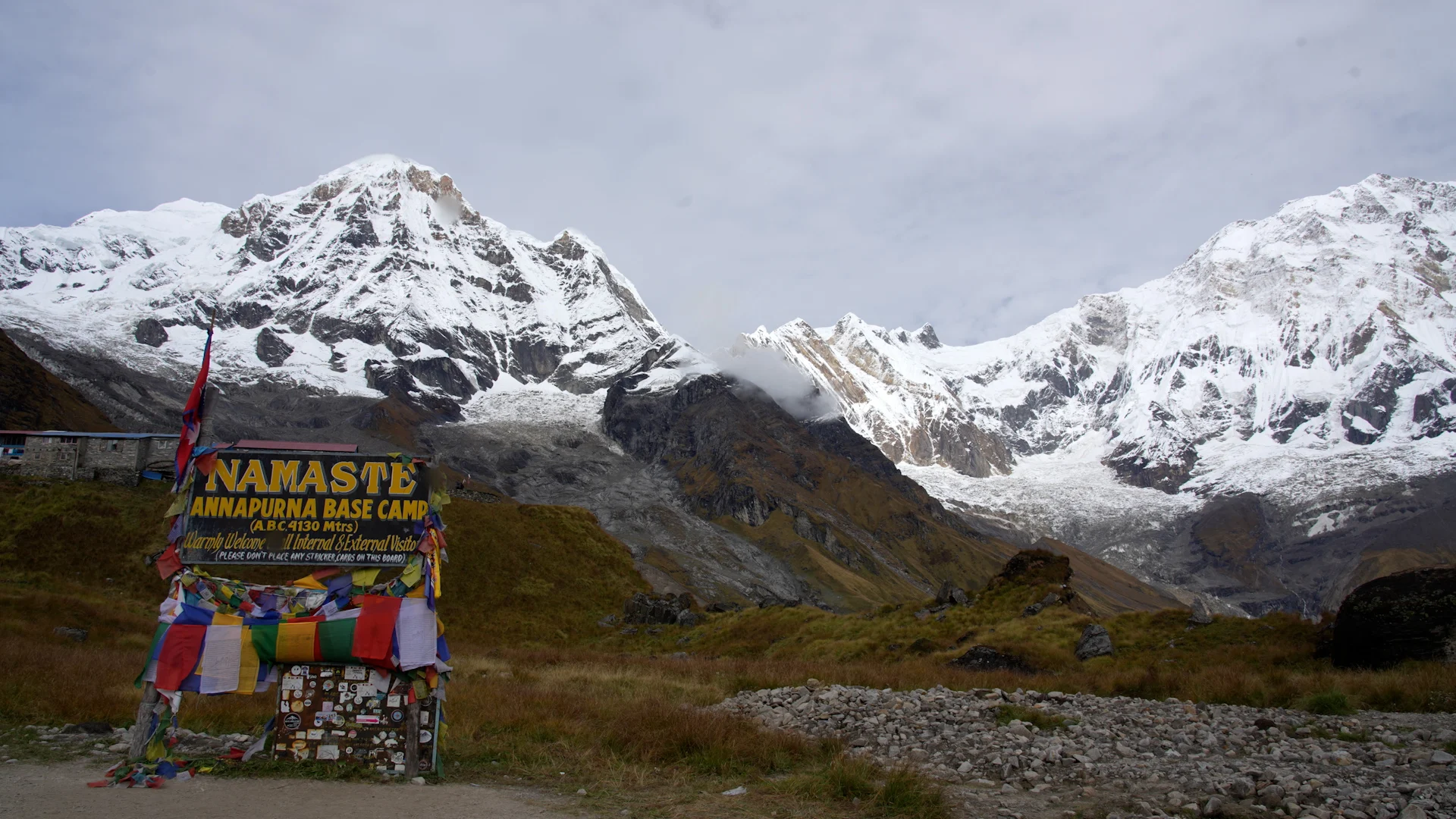
    Filming in the Annapurna region is an attractive destination for film shooting in Nepal. Annapurna region, formally known as the Annapurna Conservation Area Project (ACAP) or informally as the Annapurna Sanctuary, is one of the most beautiful natural regions in Nepal, with an altitude range between 1800 meters to 5500 meters above sea level. This area is home to some of Nepal’s best filmmaking locations, with dozens of mountain peaks, trekking trails, rivers, lakes, gorges, etc. ACAP area is a filmmakers’ paradise. This article will discuss the filmmaking requirements in the Annapurna region and what filmmakers must pay attention to before arriving. Due to its unique natural and cultural features, many film production companies nowadays use film shooting. Some Nepali films like Pream geet-1, Pream geet-3, kabbadi kabbadi are shot in the Annapurna region.

    About Annapurna Conservation Area (ACAP)

    Founded in 1986 AD, the Annapurna Conservation Area Project (ACAP) is NTNC’s most significant undertaking. It is also the first protected area and the largest protected area in Nepal. It covers an area of ​​7,629 km2. and is home to more than 100,000 inhabitants of various cultural and ethnic groups. ACAP area is rich in biodiversity. It is a treasure house hosting 1,226 species of flowering plants, 105 mammals, 518 birds, 40 reptiles, and 23 amphibians.

    Several features make the Annapurna region a unique place in the world. It has the deepest river gorge in the world – Kali Gandaki Gorge, which is 3 miles long and 1.5 miles wide; it is a valley with fossils from the Tethys Sea dating back 60 million years. The region is also home to one of the most extensive rhododendron forests in the world at Ghorepani. Located in Manang, north of the Annapurna massif, Lake Tilicho is the highest freshwater lake in the world.

    The biodiversity of the Annapurna area is only rivaled by its cultural diversity. Gurung and Magar communities are the dominant ethnic groups in the south, while Thakali, Manage, and Loba are prevalent in the north. These groups speak their dialect and have unique cultures and traditions. Besides there are also Brahmins, Chhetris, and other professional castes. Hindu, Buddhist, and other Tibetan-Buddhist religions are prevalent throughout the region. Locals here mostly live within the area’s five districts and 15 rural municipalities.

    The natural and cultural factors of the Annapurna Conservation Area have made it the most popular tourist destination in the country, attracting countless domestic and foreign tourists every year. Over the years, tourism has firmly established itself as one of the most critical sectors of the local economy, with more than 1,000 lodges, teahouses, and other ancillary services to cater to thousands of tourists, pilgrims, and their support staff.

    Filming in the Annapurna area

    Filming in the Annapurna region is open for filmmakers. For casual filmmakers, filming is free of cost, except for aerial filmmaking, which we will discuss below.

    For professional film crews and larger setups, it is mandatory to acquire a set of permits for filming (except for domestic productions), which are listed below:

    1. Nepal filming permit (from Film Development Board, @US$ 150)
    2. ACAP filming permit (from the National Trust for Nature Conservation – NTNC, @ US$ 1500)
    3. Aerial filming permit for drones and UAVs (from NTNC, @ US$ 375)
    4. Restricted Area Permit for filming in Upper Mustang (from the Department of Immigration, @ US$ 5000)

    Getting Film Permit in Annapurna region

    For professional filmmakers and larger crews interested in Filming in the Annapurna region , the preparation process can be summarized below:

    Before arrival:

    1. Get your dates, travel itinerary, and tentative crew size.
    2. Find a local management agency/ground handling agency in Nepal as your guarantor, which you will need while applying for a Nepal filming permit and other permits (which will be issued based on the former)
    3. Then ask your ground handling agency to fill up the forms needed for the paperwork, and wait for around 10-15 days before everything is ready. UAV permits can take slightly longer as it involves other agencies, including the Civil Aviation and National Security departments
    4. Be sure to pre-book your travel and logistical arrangements for the Annapurna region, as it is tough to coordinate while on the trail.
    5. Film crews can also ask their ground handling agencies to act as their producers while on the ground. They will assign fixers and other necessary personnel to make all your arrangements, including travel and logistics, and even hiring local talent or equipment for filmmaking.


    We hope this article helps you. If you have further inquiries, drop us a line anytime. We at Cine Makers also offer a full suite of production and ground-handling services for foreign and domestic teams. We are here to help you with your film project anywhere in Nepal, just a call away.

  • The Filmmaking Process in Nepal

    The Filmmaking Process in Nepal

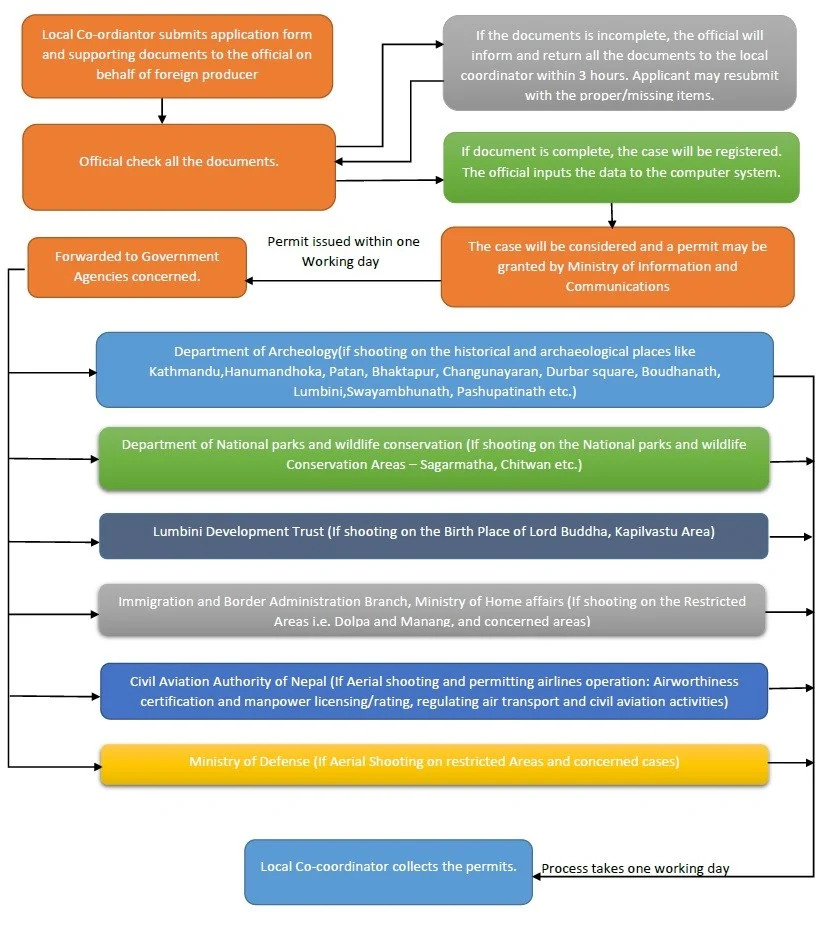
    Filmmaking process in Nepal for foreign productions is particular but well documented. This article will summarize the procedure below to make it easier for readers interested in this topic.

    Please note that filmmaking process in Nepal in only applicable to professional film crews and larger productions with advanced equipment and is not applicable to casual filmmakers.

    Step 1

    In the first step of film making process in Nepal, you will need to look for a local ground handling agency in Nepal that will act as your guarantor for the following permits and paperwork. This is a mandatory requirement.

    Step 2

    The local agency will then organize all necessary documents and submit the application form to the Film Development Board for the National Film Permit. This process takes around 7-10 days.

    Step 3

    You will need to check if you are to film in any national park, conservation area, or even some specific architectural sites and relics. You can check on this with your ground handling agency. Then you will need to separately apply for these particular permits at specific national parks or conversation area offices. These permits will also cost you money.

    Step 4

    If you are flying a UAV for filming, you will need permission from the Civil Aviation Authority and the Ministry of Defense. The ground handling agency will require a copy of the pilot’s license or safety certification (issued by his home country or any institutions registered there) and apply for the permit. This process can take upwards of 15 days.

    Once you have this permit, you must check if you will fly the drones in any restricted or protected area. If yes, you will again need to go to specific offices to get particular permits based on the previous UAV permit. This process will cost you money in terms of royalty.

    Step 5

    Before arrival, you should also consider pre-booking all your travel and logistical requirements with your ground handling agency. It might be tricky planning on the go, as information that serves the interests of the film crew is often limited. Your ground handling agency can do this for you and even help you save money in the end.

    Additionally, if your ground handling agency is a production agency, they might help you with production planning, hiring talents, or even renting filming equipment. So choosing the ground handling agency becomes critical to your filming in Nepal.

    Step 6

    Now one last step film making process in Nepal remains. You must provide your ground handling agency with a summary of your filmmaking gear and equipment (including the valuation). The agency will then use this to apply for a customs exemption at the airport, ensuring that your inventory (especially in terms of advanced gear with a larger footprint) is not withheld.

    We hope that this article helped inform you. !!!!

    Filmmaking process in nepal


  • Nepal for Adventure Filmmakers

    Nepal for Adventure Filmmakers

    Nepal is for adventure filmmakers; the sense of adventure and the feeling of walking on the knife’s edge, fighting the fastness of nature, etc., are their bread and butter. In this pursuit, a true story, activity, cast, or camaraderie is not enough to make your content stand out. The core here is the location where you will be filming. Your adventure film is solid if the site is raw, thrilling, and gives a sense of visual excellence.

    In this area, Nepal has a lot to offer. Below are some popular activities that interest adventure filmmakers looking to capture a different vibe in a different location.

    If you like adventure films, I, a Nepal cinemaker, can access you. For detailed information, please feel free to contact us.

    Mountaineering

    Eight of the World’s 14 highest mountain peaks (above 8,000 meters) are in Nepal. The highest mountains in Nepal are Sagarmatha (8,848 m), Kanchenjunga (8,586 m), Lhotse (8,516 m), Makalu (8,463 m), Cho Oyu (8,201 m), Dhaulagiri (8,167 m), Manaslu (8,163 m) and Annapurna (8,091 m).

    There are hundreds of mountain peaks in Nepal. On the recommendation of the Nepal Mountaineering Association, the Government of Nepal has considered the mountain a ‘peak’ of over 5,800 meters. Permission should take for such avalanches and mountain climbing. The number of such peaks is 1,792. The Government of Nepal permits 403 mountain peaks. In Nepal, there are 1,310 peaks higher than 6,000 meters. Permission is

    not required to climb mountains less than 5,800 meters.

    Trekking

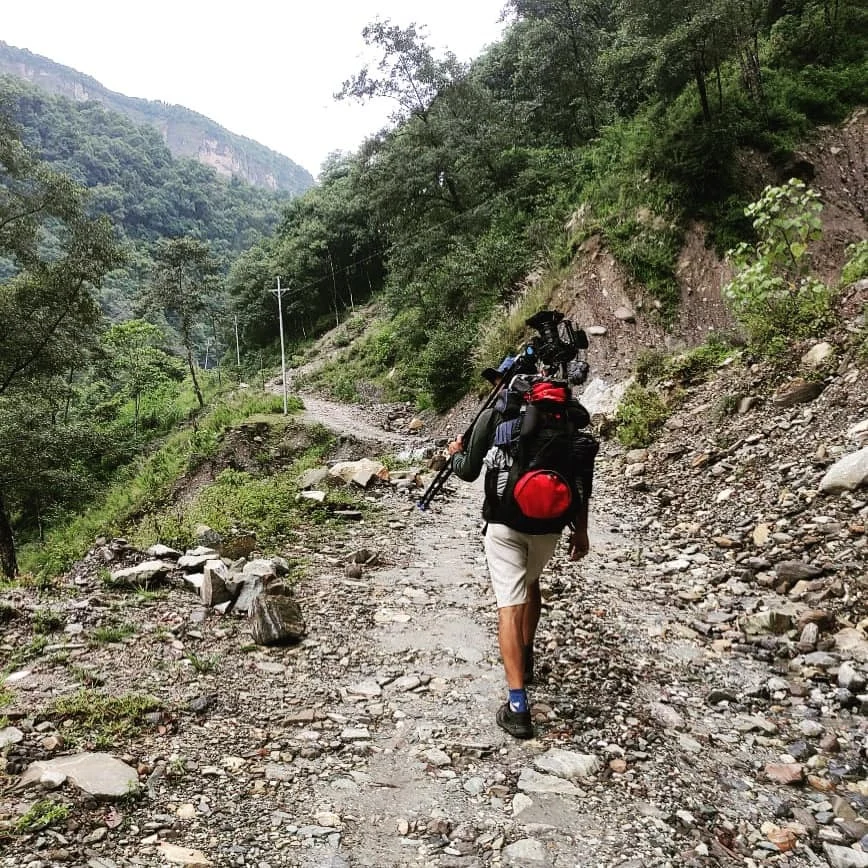
    Nepal is for adventure filmmakers, whereas Nepal is a country of many small villages with unique cultures and traditions. That is why most villages lie in our country’s hilly region. We can trek anywhere. Nepal can be trekked up to the foot of the mountain, over 8000 meters high. Everest trek, Kangchenjunga, Makalu, Dhaulagiri, Manaslu, and Annapurna Himalayan trekking are popular. Likewise, the Annapurna Circuit, Langtang, Mardi Himal, Ghandruk- Ghorepani Trail, Khaptad Trail, Rara Trail, Ganesh Himal Trail, Mundum Trail, Guerrilla Trail, Karabakeli eco-trek are also available. Tea house trekking is possible on most trails; sometimes, a camping trek is used.

    Cycling

    Mountain biking is good on the hills of Nepal. Cycling is done especially in Kathmandu, Pokhara, and Dharan Valley. Because of their natural beauty and cultural diversity, various cyclists often choose these places.

    Apart from this, the professionals start cycling from Besisahar in Lamjung district to Beni in Myagdi district for 12 days in Annapurna Circuit, seven days in Lower Mustang, 12 days in Upper Mustang, and ten days in Kathmandu-Pokhara.

    Rafting

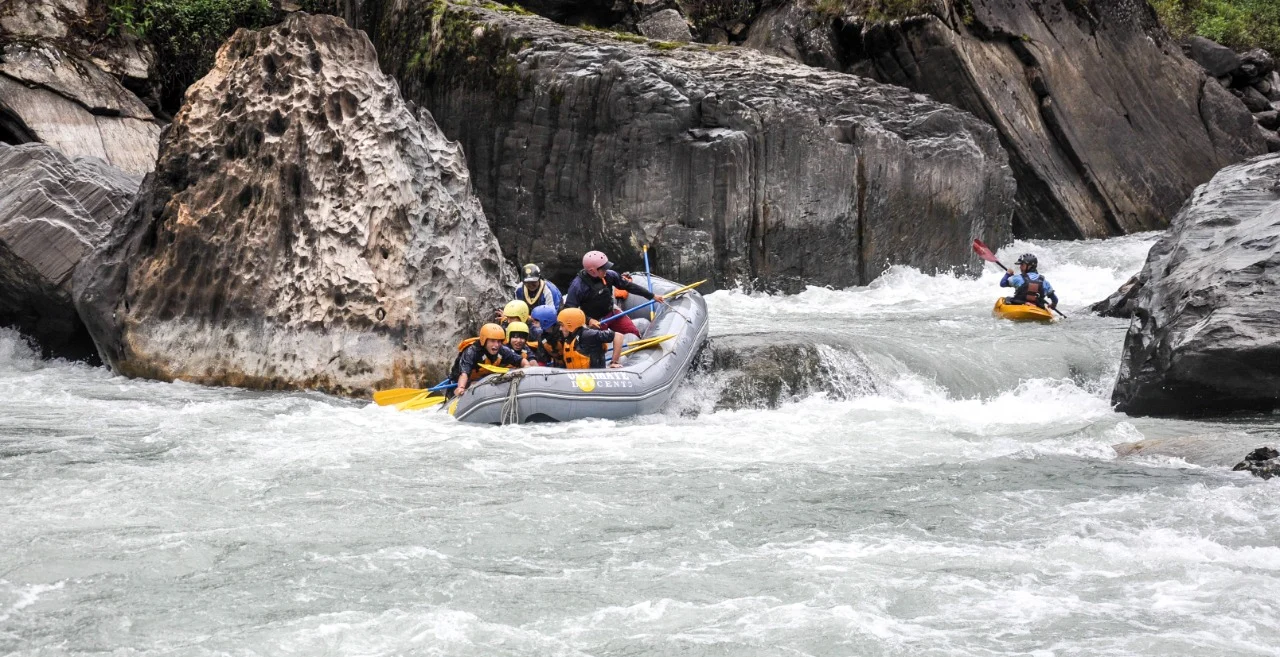
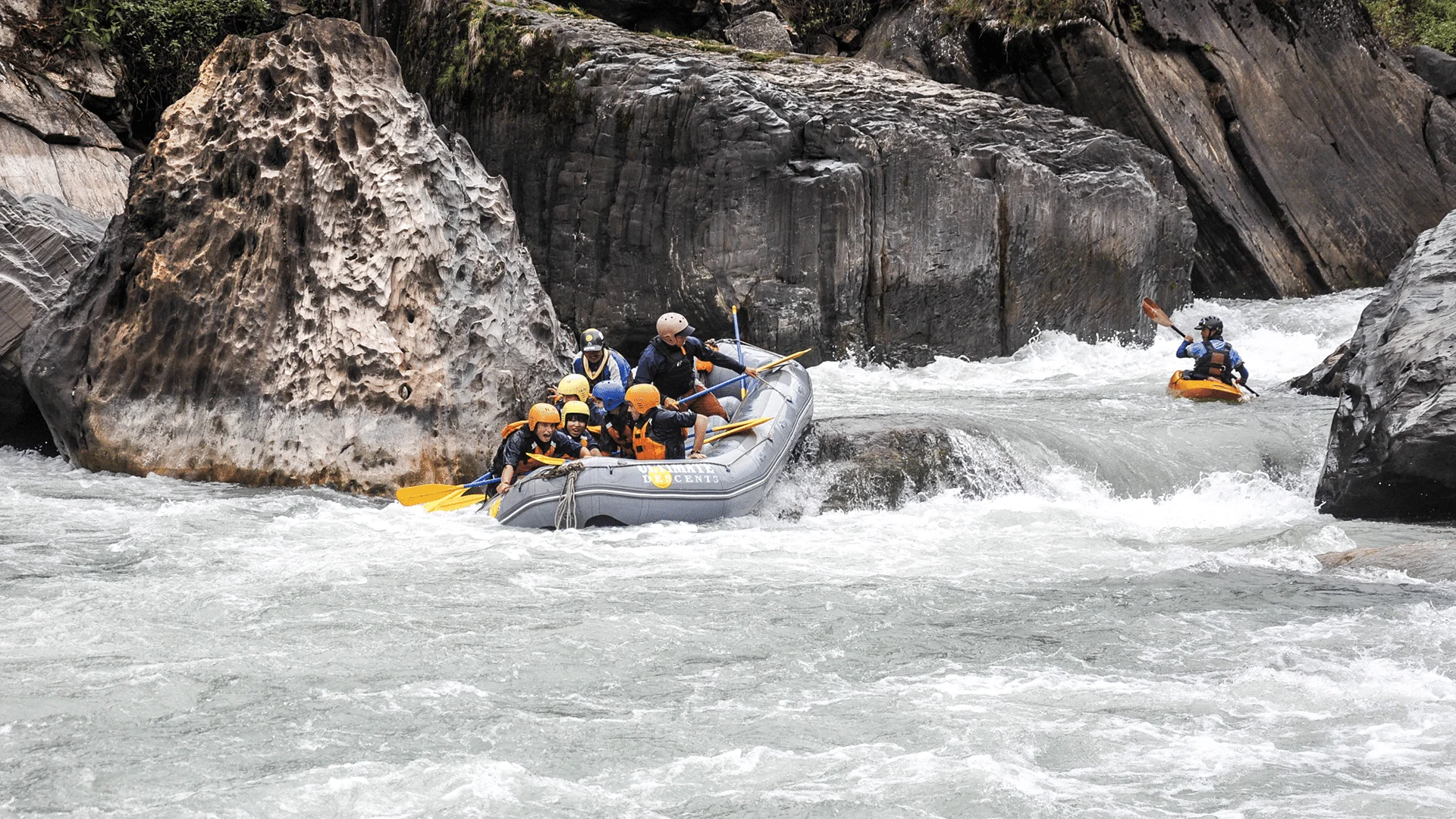
    Nepal is an excellent destination for adventure filmmakers like rafting and kayaking. According to whitewater rafting, Bhotekoshi is among the ten best destinations in the World. Rafting has increased in Trishuli and Bhotekoshi rivers as it is the nearest destination from Kathmandu. In addition, rafting and kayaking are done in Seti, Kali Gandaki, Marshyangdi, Tamor, Bheri, and Arun rivers. Kayaking is available in the Mahakali River.

    Paragliding

    Many mountain ranges in Nepal are suitable for paragliding. Paragliding is conducted commercially from sharankot in Pokhara Valley, Godavari, Dharan, Kathmandu, etc. Pokhara is famous for other different adventure activities in the World. The city comprises mountains, lakes, a temple, the Chaitya, and the monastery.

    Bungee

    Bungee jumping facilities are available in Sindhupalchowk and Pokhara in Nepal. High Ground Adventure Nepal operating in Pokhara, offers an 80-meter tower Bungee. At Bhotekoshi in Sindhupalchowk, the Bungee juprovidedffered from the 160-meter-high steel suspension bridge. The Last Resort uses it.

    Likewise, Bungee Jump is under construction in Kushma. From a suspension bridge at 228 m, Bungee jumping into Kali Gandaki River will be possible.

    Zipline

    Zip lines operate in Pokhara, Dhulikhel, and Bharatpur in Nepal. High Ground Adventure uses a zip line from Sarangkot, Pokhara, to World Wide Adventure in Dhulikhel of Kavre and Jaldevi Community Forest to Bharatpur.

    All three zip lines have different characteristics. In Pokhara, a 1,800 m distance zipline is done at 140 km per hour. The Superman zip line operates in Dhulikhel. Similarly, Bharworkserates a zip line from 55 m to 185 m.

    Canyoning

    There is excellent potential for canyoning in Nepal, a country of waterfalls. The Nepal Canyoning Association (NCA) has already studied the feasibility of canyoning in about four dozen waterfalls in Nepal. Canyoning is

    done commercially in Sundarijal in Kathmandu, Kakani in Nuwakot, Lwang Ghalel in Kaski, Bhotekoshi River in Sindhupalchowk, and the Dhankuta Namaste waterfall. In addition, some waterfalls in Manang, Dhading, Okhaldhunga, and a few mountain waterfalls are suitable for canyoning.

    The longest waterfall in the World (2,000 m) is in Lamjung, and canyoning is also done in Manang’s Phu village at 5,215 m.

    Honey hunting

    Many bees are found in the central mountain geography of Nepal. Honey hunting is practiced twice yearly, from mid-October to mid-December and mid-February to mid-May. It is not easy to extract honey from the bee hive. A group of hunters with knowledge of the natives hunts the honey.

    With the help of rope and bamboo, the bee hive reaches, and the bees are distracted by the smoke. This way, when the bees are away, honey is extracted. They have their traditional method of extracting honey. They worship the deity before hunting.

  • Drone Permits in Nepal: What Productions Need to Know

    Drone Permits in Nepal: What Productions Need to Know

    Nepal has rich and diverse natural landscapes, making it a paradise for flying drones and small UAVs for enthusiasts and professionals. It is compulsory to take a drone permit in Nepal. For filmmakers planning to film in Nepal, bringing a drone is essential as it provides opportunities for unique moments, stunning backdrops, and unexpected POVs and camera angles. In this land of mountains, rivers, and temples, UAV-based filming will allow you to capture the magnitude of nature and man’s insignificance separately and in a single frame.

    If you plan to make any film in Nepal, need access to a supportive team, or obtain any kind of support in Nepal, please feel free to join Cine Makers or contact us.

    Flying UAVs and drones for filming in Nepal is allowed legally by the Civil Aviation Authority of Nepal (CAAN) under the Nepal drone permit laws. Filmmakers need to follow the procedure outlined by CAAN and get an appropriate drone permit in Nepal based on the purpose, location, and drone / UAV type. Drone permit for film in Nepal is a necessity for enthusiast and professional filmmakers,

    For casual filmmakers and small film crews using amateur or semi-professional UAV equipment (within 2 kgs). There are various things you need to consider before getting your Nepal drone permit:

    • Evaluate if your drone meets the security standards of the airline or the airport in your nation
    • Check whether your drone is equipped with any dangerous materials that do not meet transport requirements (such as high voltage batteries that might need additional clarification during airport security checks)
    • Search and examine the particular regulations of your airline on traveling with a drone
    • Also, ensure you are familiar with Nepali drone legislation and other regulations before getting your drone to permit Nepal.

    Climate

    For UAV and drone operators interested in aerial photo and videography, you must be fully aware of the climatic conditions in Nepal before arriving. It will determine the success or failure of your UAV endeavors and the quality of your footage. Before getting your drone permit for film in Nepal, you must pay attention to this area.

    Specifically for filming in the high Himalayas, it is recommended that you travel during spring (March-May) and fall (September-November). Which are the also among the best seasons for traveling to Nepal. During this time, the weather is fair, the skies are blue, and the mountains are full of snow. The wind is also within a controllable range, making for a smooth and risk-free flying experience.

    Following this recommendation is unnecessary if you are not filming high in the mountains. You can arrive at any time of the year, except for peak monsoon (July-August) due to the unpredictable rainfalls and during the peak of winter (December – January) due to heavy fogs throughout the country. It is better to avoid these two time periods to reduce the risk of damage and loss of your drone / UAV.

    Getting your drone permit in Nepal

    Drone and UAV legislation was passed in Nepal in 2015 to facilitate journalistic and humanitarian relief and rescue operations during the 2015 earthquake that shook the country. This catastrophe also set the stage for UAV and drone operation inside a legal framework in the country, which made getting the Nepal drone permits possible. This also popularized the concept of drone permits for film in Nepal.

    The legal framework to acquire a drone permit in Nepal reads as follows:

    • Operating drones in Nepal by a foreign visitor requires permission from the Civil Aviation Authority of Nepal (CAAN)
    • Tourists who wish to get a drone permit in Nepal must first acquire authorization from the Ministry of Home Affairs, Department of Tourism, and Civil Aviation Authority of Nepal. However, it is not crucial if a drone is less than 2kg and flies below 200ft from the ground.
    • Prior authorization from the department relating to the subject matter of study, the Ministry of Home Affairs and the Civil Aviation Authority of Nepal are required to fly a drone (more than 2kg) for research and educational purposes.
    • Suppose Tourists wish to fly a drone inside national parks and conservation areas. They must acquire a drone permit in Nepal from the authorization of Boddy Conservation Area/ National Parks, the Ministry of Home Affairs, the Department of Tourism, and the Civil Aviation Authority of Nepal.
    • Less than 2kg drones weighing (4.5 pounds) need not require a permit from the CAAN authorization. If flying over private land at a height not exceeding 200 feet, it does not require a Nepal drone permit.
    • Drone pilots should have skills in flight and a basic understanding of drone operation rules and laws in Nepal.
    • Do not fly a drone in a way that endangers the safety of the UAV flying in the area.
    • Use a UAV only within the extent of your authorization.
    • Flying a drone without a permit is forbidden and will result in penalties in conformity with civil aviation laws.
    • Flying a UAV in a public place for recreational purposes necessitates authorization from the local security agency.
    • The person operating a drone is solely responsible for any injury to individuals or damage to property caused by the operation of the drone.
    • Don’t fly a drone higher than 120m (394ft) and outside of the operator’s line of sight, and that too no further than 500m (1,640ft).
    • Avoid flying a drone carelessly, and don’t use it to harm the local flora and fauna.
    • Flying within 50 meters (164 feet) of any locomotive or a construction venue is prohibited.
    • Airport zones should be clean from all drone activities.

    Drone permit in Nepal is a very messy topic due to the different laws and policies that apply to different types of drones / UAV, the purpose of flying, region, and so on. So, it is recommended that you get in touch with us, and we will answer all your queries.

    Recognized UAV types and risk rating

    The government of Nepal has classified drones into four categories based on weight and risk:

    • Operating drones in Nepal by a foreign visitor requires permission from the Civil Aviation Authority of Nepal (CAAN)
    • Tourists who wish to get a drone permit in Nepal must first acquire authorization from the Ministry of Home Affairs, Department of Tourism, and Civil Aviation Authority of Nepal. However, it is not crucial if a drone is less than 2kg and flies below 200ft from the ground.
    • Prior authorization from the department relating to the subject matter of study, the Ministry of Home Affairs and the Civil Aviation Authority of Nepal are required to fly a drone (more than 2kg) for research and educational purposes.
    • Suppose Tourists wish to fly a drone inside national parks and conservation areas. They must acquire a drone permit in Nepal from the authorization of Boddy Conservation Area/ National Parks, the Ministry of Home Affairs, the Department of Tourism, and the Civil Aviation Authority of Nepal.
    • Less than 2kg drones weighing (4.5 pounds) need not require a permit from the CAAN authorization. If flying over private land at a height not exceeding 200 feet, it does not require a Nepal drone permit.
    • Drone pilots should have skills in flight and a basic understanding of drone operation rules and laws in Nepal.
    • Do not fly a drone in a way that endangers the safety of the UAV flying in the area.
    • Use a UAV only within the extent of your authorization.
    • Flying a drone without a permit is forbidden and will result in penalties in conformity with civil aviation laws.
    • Flying a UAV in a public place for recreational purposes necessitates authorization from the local security agency.
    • The person operating a drone is solely responsible for any injury to individuals or damage to property caused by the operation of the drone.
    • Don’t fly a drone higher than 120m (394ft) and outside of the operator’s line of sight, and that too no further than 500m (1,640ft).
    • Avoid flying a drone carelessly, and don’t use it to harm the local flora and fauna.
    • Flying within 50 meters (164 feet) of any locomotive or a construction venue is prohibited.
    • Airport zones should be clean from all drone activities.

    Drone permit in Nepal is a very messy topic due to the different laws and policies that apply to different types of drones / UAV, the purpose of flying, region, and so on. So, it is recommended that you get in touch with us, and we will answer all your queries.

    Recognized UAV types and risk rating

    The government of Nepal has classified drones into four categories based on weight and risk:


    Aerial drone view over Nepal

    Conclusion

    As we said below, Nepal is a paradise for flying drones / UAVs for photo and videography. While you will enjoy getting those excellent shots, you will also need to bear the hassle of paperwork to be safe and within the bounds of the law. Especially for small crews and independent filmmakers, the legal troubles will take all the fun out of filming and travel. So, whether you are a small team or a large crew, you can contact us to handle your paperwork.

    We also provide professional travel, logistical, creative, and rental solutions for film projects across Nepal. You are definitely in good hands with us.


  • Indra Jatra: Inside Kathmandu’s Biggest Celebration

    Indra Jatra: Inside Kathmandu’s Biggest Celebration

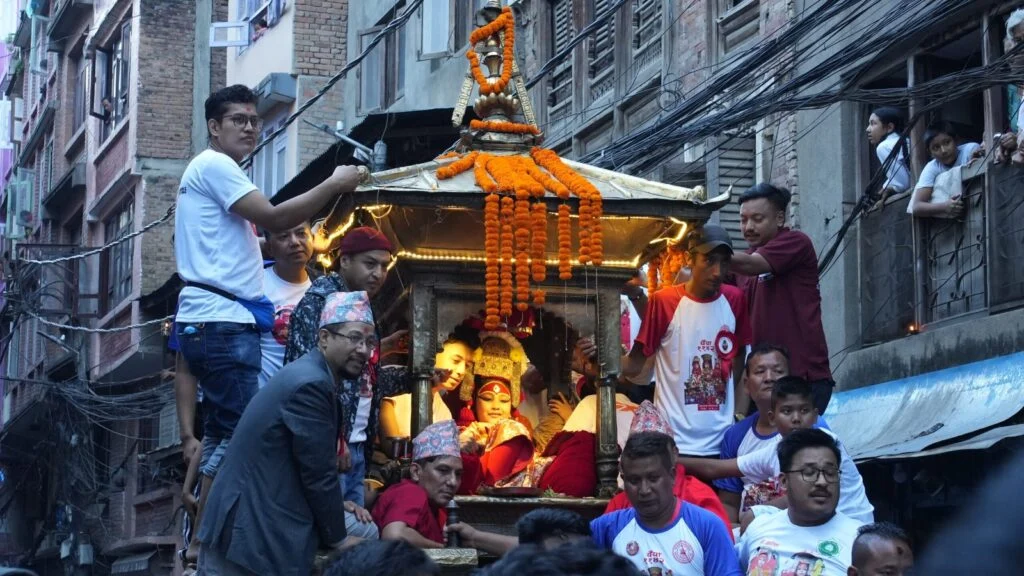
    Indra Jatra, Nepal’s most prominent religious street festival locally known as ‘Yenya’ in Kathmandu, signifies the union of ‘Yen’ (Kathmandu) and ‘Ya’ (celebration). Within Yenya, two significant events take place. The first, Kumari Jatra, spans three days where three chariots, representing revered deities like goddess Kumari, lord Ganesh, and lord Bhairava, are ceremoniously paraded along diverse festive routes in Kathmandu. Meanwhile, Indra Jatra, honoring the lord of heaven and rain in Hindu mythology, is a festivity filled with hopes for abundant rainfall in the upcoming year. Centuries of tradition have tied local farmers closely to this celebration, which typically spans 7-8 days, culminating in a spectacular display during the initial days of Indra Jatra.

    History and tales:
    This celebration was started by King Gunakamadeva, founder of city of Kathmandu, in 723 AD. He started this festival in remembrance of the founding of the Kathmandu Valley. This festival has been celebrated with the same authenticity since then. There are many folk tales relating to this festival. The famous one among them is about lord Indra. Lord Indra came down to earth from heaven in search of parijat (night Jasmin) for his mother. He was caught stealing the flower from the garden and bounded like a common thief. He was put on display in the town square of Kathmandu. His mother, worried about his late return, came to Kathmandu and wandered around the valley. After people found out that they have bounded the lord Indrahimself, they were horrified and immediately released him. Out of appreciation for Indra’s release his mother promised to provide enough dew throughout the winter so that the crops would grow properly. It is believed that after that time Kathmandu started to have misty morning in the winter.

    Highlights

    Towering of lingo:
    lingo is a ceremonial pole selected to be erected and worshipped during different festivals in Nepal.it is chosen from the straight trees found in kavre of Nepal. The tree is cut down, branches cut off and stripped of its bark. The towering of lingo marks the starting of the IndraJatra festivals. People use thick ropes to erect the 36-foot wooden pole. The banner of lord Indra is place on the top of the pole, showing that it is the land of lord Indra.

    Lighting incense sticks:
    the people who have lost loved ones in the past year, the incense sticks are burned at various temples around the Kathmandu valley. This ritual is to respect the deceased one so that others can wholeheartedly be involved in the coming celebrations.

    Unveiling of the Sweta Bhairava in Kathmandu Durbar square:
    Bhairava is the more terrifying form of lord Shiva. It was built to protect the city from all the threats. The huge mask of Bhairava is kept behind wooden windows throughout the year. It is unveiled on the first day of IndraJatra till the end of the festival. A long pipe is placed on the mouth of the Bhairava during the festival. In the evening, traditional Nepalisliquors and rice beer are distributed to the public through the pipe with a crowd of men.

    Kumari Jatra
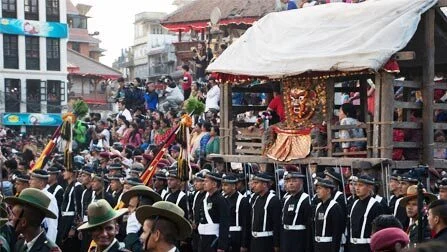
    Kumari Jatrawas is a tradition formed around 1756 AD. It was started by the king Jaya Prakash Malla. Kumari Jatra starts on the third day of the IndraJatra. The head of the country visits the Kumari and receives blessings for their rule. They bow before the living goddess and receive tika from her hand. Men pull the chariots of Ganesh, Bhairava, and Kumari to different parts of Kathmandu. Traditional music, bands, and dances accompany the march. The march usually starts at 3 pm.on the first day of KumariJatra, the chariots are pulled to the downtown area following the route starting from Basantapur, Maru, lagan, Wonde, Kohity, and Bhimsenthan and returning to Basantapur. On the second day of the Jatra, the chariots are pulled through the uptown area following the route starting from Basantapur, Pyaphal, Nyata, Tengal, Asan, Indrachwok, Makhan and returned to Bansantapur. On the third day, the chariots are pulled through mid-town areas following the routes starting from Basantapur, Pyapal, Yatkha, Nyata, Kilgal, Indrachwok, and Makhan and returned to Basantapur.

    Masked dance
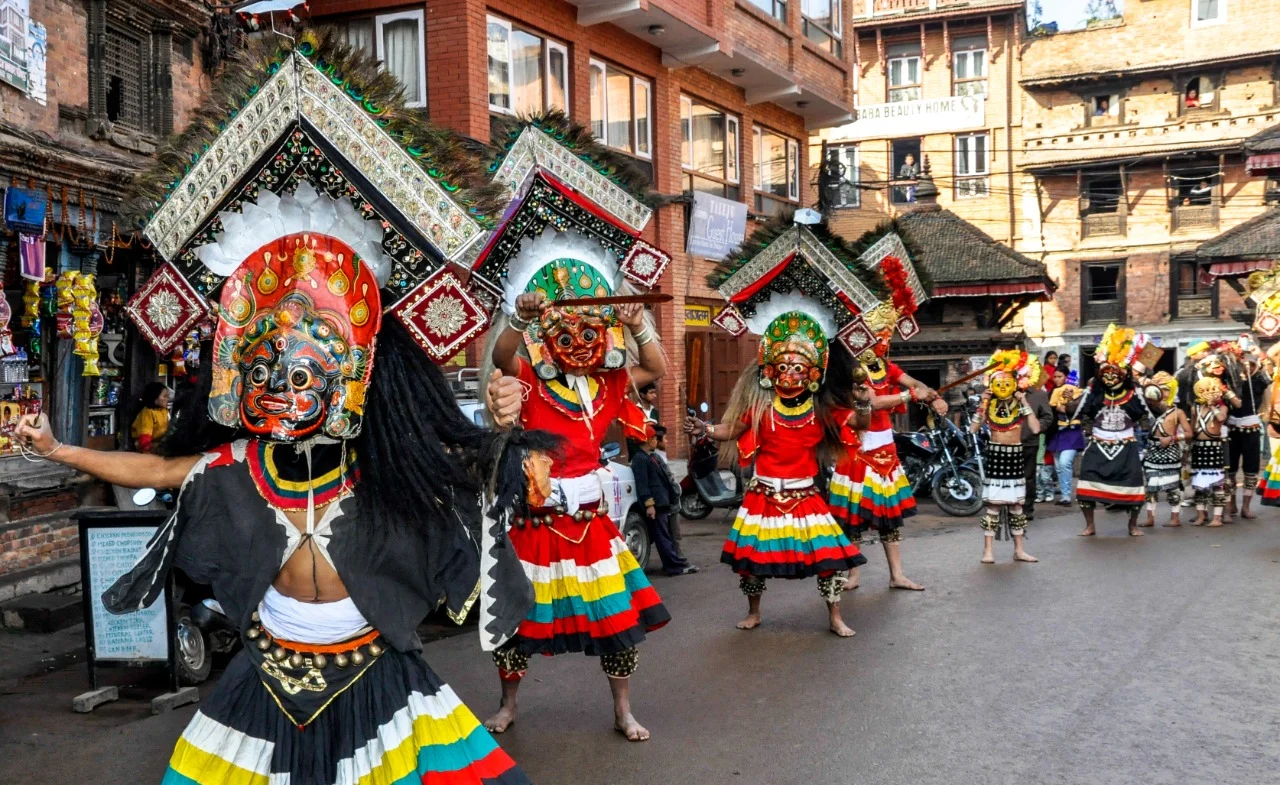
    Different traditional dances performed by the possessed men wearing colorful clothes are the most interesting activity of IndraJatra. Certain communities or neighborhoods perform some of the masked dances.

    Pulukisi (elephant) dance
    The residents of Kilagal Tole perform this dance. They create a straw-woven and wooden masked elephant, representing it as the ride of lord Indras. It is carried in the streets of Kathmandu, enacting the search for the Indra’s elephant during his imprisonment. People cheer and dance while carrying the elephant, usually accompanied by a musical band. A person runs in front carrying a torch. Elephant runs through the streets, knocking anyone in its path.

    Lakhey dance
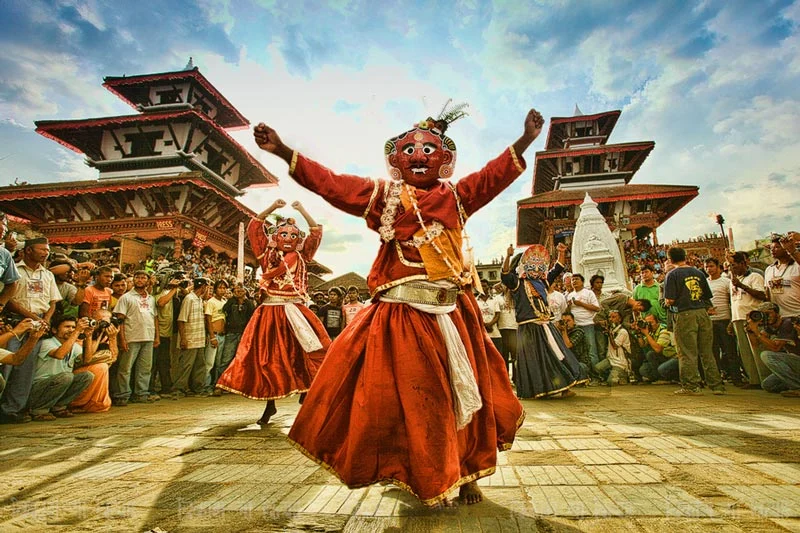
    A Lakhey is a man-eating demon wearing a huge red mask with scary big eyes, stuck-out fangs, jagged teeth, and a dark wig. People believe that the spirit of Lakhey resides within the mask of Lakhey. As a dancer puts on the mask, the spirit of Lakhey possesses him, and the demon controls his movement. The Lakhey starts to dance while intimidating the people all around him. Lakhey dance has a swift movement of hands while running on the beat of music. Lakhey pushes anyone on its path while the crowd follows him with fascination.

    The lingo erected on the first day is taken down on the last day of IndraJatra. Indra’s flag (Indradhwaj) is floated away in the Bagmati river. This marks the end of the IndraJatra festival. IndraJatra brings people from all over the country from different cultures and communities. Not only the Newars of Kathmandu but the other people outside the valley gather together to see the festival. There is no restriction toward any community or religion to observe the festival. It is an amazing experience to be in Durbar Square during the festival of IndraJatra. IndraJatra also marks the start of the two biggest festivals of Nepal, Dashain and Tihar. If you are planning your trip to Nepal around September or October, you can consider making a plan accordingly. For more information on Nepalese culture and Nepal travel, contact us at RedCarpet Journey.

    Our documentary Divine Dilemma tells the story of Indra Jatra and the beliefs behind it.